Tag: Brake Pads

  • List of Car Parts

    Here’s a complete list of car parts and their functions. The list here includes almost everything you can see on a car such as car body, wheels, tires, seats, battery, interior, dashboard, as well as every part under the hood. Each part on a car has name. You should learn the top 10 most important auto parts and components to make things easier when it comes to car maintenance. The list here is sorted from A to Z according to car parts vocabulary word. Let’s begin to learn the ABC!
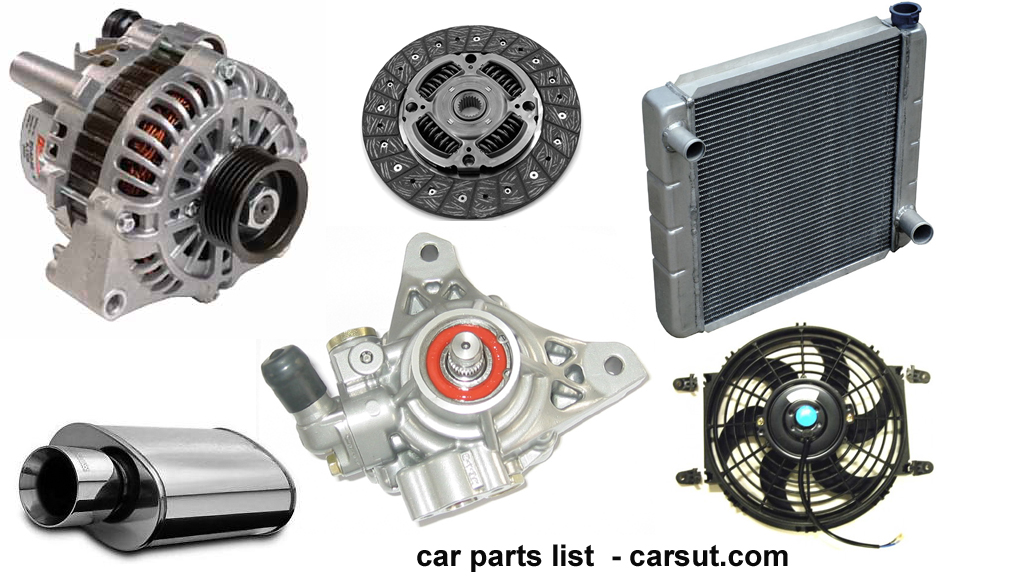
    list of car parts automobile

    A

    accelerator
    accessory belt
    airbag
    air conditioner
    air conditioning – a complete ac system includes A/C cluth, A/C compressor, A/C condenser, A/C hose, A/C kit, A/C relay, A/C valve, A/C expansion valve, A/C low-pressure valve, A/C schrader valve, A/C INNER PLATE, A/C cooler, and A/C evaporator.
    air conditioning compressor – a main component to put freon in the AC system for you to stay cool inside the car.
    air filter – filter all the unwanted dust and allergens before the air gets into your car.
    air intake housing – car parts under hood
    air intake manifold – car parts under hood
    air vent
    alarm and siren
    all-wheel drive
    alternator – there are alternator bearing, bracket, fan and other alternator parts. It allows your car battery to charge while the engine is running.
    anchor
    antenna
    anti-lock brakes system (ABS)
    armrest
    auto
    automatic transmission
    automobile
    axle – an important part of any car to keep the wheel rolling.

    B

    baby car seat
    baby seat
    back-up lights
    battery – this is the main thing/power to turn on your car. There are battery box, cable terminal, cable, control system, plate and tray.
    bench seat
    bleed nipple
    bonnet
    brakes – you can’t stop a car without a brake system. this include brake fluid, drum, lining, pad, pedal, piston, pump, roll, rotor, server, shoe, lining, caliper, hose, hydraulic booster, master cylinder, metering valve, vacuum brake booster, and wheel cylinder.
    brake backing plate
    brake backing pad
    brake cooling duct
    brake disc
    brake light
    brake pedal
    bucket seat
    bumper – there are unexposed bumper and exposed bumper

    C

    camshaft – car parts under hood with bearing, fastener, follower, locking plate, pushrod and spcer ring
    car
    carburetor – it mixes air with a fine spray of liquid fuel for combustion.
    carpet
    catalytic converter – reduce the emissions from your vehicle.
    center console (front and rear)
    central locking
    chassis
    chassis control computer
    child car seat
    chrome trim
    clutch – clutch move form gear to gear to keep the driving smoothly.
    computer
    connecting rod – connecting rod bearing, bolt and washer.
    console
    cooling system
    cowl screen
    crank case
    crank pulley
    crankshaft
    cruise control
    cylinder
    cylinder head
    cylinder head gasket

    D

    dashboard – there are center console and glove compartment
    defroster
    decklid – a cover allows you to access to the main storage or luggage compartment. Mostly on a station wagon.
    diesel engine
    differential
    dip stick
    distributor
    distributor cap
    door
    door contact
    door handle
    drive belt
    drive shaft
    driver’s seat

    E

    emergency brake
    emergency lights
    emissions
    engine – see the labeled diagram of car engine for better understanding.
    engine block
    engine cradle
    engine computer and management system
    engine control unit (ECU)
    engine fan – to keep air flowing over the radiator to cool down the engine coolant.
    exhaust pipe
    exhaust system – exhaust clamp and bracket, flange gasket, manifold, pipe, heat shield, heat sleeving and tape, and spacer ring.

    F

    fan belt
    fascia rear and support
    fender
    filter
    floor mat
    fog light
    four-wheel drive
    frame
    front clip
    fuel
    fuel cap
    fuel filter
    fuel gauge
    fuel injector – it gets the gasoline/petrol from the fuel tank into the engine.
    fuel pump
    fuel pressure regulator
    fuel rail
    fuel tank
    fuse
    fuse box

    G

    gas
    gasket
    gas pedal
    gas gauge
    gasoline
    gas tank
    gauge – ammeter, clinometer, dynamometer, fuel gauge, manometer, hydrometer, odometer (also called milometer/mileometers), speedometer, tachometer (rev counters), temperature gauge, tire pressure gauge, vacuum gauge, voltmeter, water temperature meter.
    gearbox
    gear shift
    gear stick
    glove compartment
    glowplug
    GPS
    grab handle
    grille
    ground strap

    H

    halogen
    hand brake
    headlamp
    headlight – also called headlamp
    headrest – also called armrest monitors
    heater
    high-beam headlights
    hood
    horn – or trumpet horn
    hubcap
    hybrid

    I

    ignition
    ignition coil
    ignition magneto
    indicator light – also called signal light/lamp
    instrument panel
    interior light
    internal combustion engine

    J

    jack – a car jack is important because you can’t change your tire without it.

    K

    key

    L

    license plate
    lights
    lock
    low-beam headlights
    lug bolt
    lug nut
    LPG (Liquefied Petroleum Gas) system

    M

    manifold
    manual transmission
    mat
    mirror
    mirror monitors
    moon roof
    motor
    mud flap
    muffler – the main job is to decrease the amount of noice emitted by the exhaust of an internal combustion engine.

    N

    navigation system

    O

    0-ring
    odometer
    oil
    oil filter
    oil gasket
    oil tank

    P

    parking brake
    parking lights
    passenger seat
    pedal
    pillar and hard trim
    piston – parts inside a gasoline engine to handle explosions. It’s also where your car get the horsepower.
    piston pin and crank pin
    piston pin bush
    piston ring and circlip
    power brakes
    power steering
    power window switch

    Q

    quarter panel

    R

    radiator – a major part under the hood to keep the car’s engine cool all the time.
    radio – see list of car audio brands
    rag top
    rear-view camera
    rear-view mirror
    rear window defroster
    relay
    relay connector
    remote lock
    reverse light
    rims – there are hubcap at the center
    rocker
    rocker cover
    roll cage
    roof
    roof rack
    rotary engine

    S

    seat – bench seat, bucket seat, children seat, infant seat.
    seat belt
    seat bracket
    seat cover
    seat track
    shift
    shock absorber – an important part to reduce the stress of the bumping and make your ride more pleasant.
    side airbags
    side mirror
    spare tire – nowadays some new cars feature run-flat tires and you don’t see these anymore.
    spark plug – very high voltage as it uses an electric spark to ignite fuel in the engine. This is
    sparking cable
    speaker
    speedometer
    spoiler – there are front spoiler and rear spoiler
    starter – there are starter drive, starter motor, starter solenoid
    starter motor
    steering column
    steering wheel
    subwoofer
    sunroof
    sun visor
    supercharger
    suspension – come with beam axle, control arm, axle, idler arm, kingpin, panhard rod, pitman arm, rack end, spindle, steering arm, steering box, steering column, steering rack, tie bar, tie rod, and trailing arm.
    switches – battery switches, door switch, ignition switch, power window switch, steering column switch, swtich cover, switch panel, thermostat, frame swith and other parts and functions of starter system.

    T

    tachometer
    tailgate
    temperature gauge
    thermometer
    thermostat
    throttle body
    tire
    trailer hitch
    transmission – very complicated thing. In a nutshell, it turns the power from engine into movement and transmit it all the way to the four wheels on a car.
    trim
    trip computer
    trunk – also called boot or hatch
    turbo charger
    turn signal

    U

    undercarriage
    unleaded gas

    V

    valance
    valve
    valve cover
    valve housing
    valve spring
    valve pump pulley
    vents
    visor

    W

    water neck
    water pipe
    water pump
    water pump gasket
    water tank
    warning light
    welded assembly
    wheel
    wheel well
    window
    window regulator
    window seal
    windshield – also called windscreen
    windshield washer motor
    windshield wiper

    From time to time, we are making the list better and better. There are so many car parts in a car and some parts are definitely missing. Please do not hesitate to contact us if you find any car part is missing from the list above. We will add it in to make the list of car parts a 100% complete one. Last but not least, see also:

  • How to Winterize Your Car

    While winter is around the corner, it is vital for everyone car owner to know how to winterize your car. Sometimes, it is tough to drive in winter time because of the road conditions, weather, and unexpected things that will happen during cold months. It is essential to know the basic things you need to check and prepare the best for your car before entering winter. Car parts such as tires, gasoline, brake pads, and all the fluid in your engine system play an important role during the winter. If you have no idea of what to do to your car for cold day, check out the 10 most vital things to do to winterize your car in a proper way.

    10 Tips to Winterize Your Car Correctly

    These are the 10 most important things you need to do in order to winterize your car correctly without spending extra money.

    1. Engine coolant

    It is necessary to have the right mixture of 60% coolant and 40% water in your radiator before the weather gets too cold especially if you live where temperatures get below freezing, for e.g., Alaska. The water in your radiator may turn into ice if the ratio is not right. 80% water and 20% coolant is definitely a bad idea. Your car engine will not function properly with ice in the radiator. Double check your owner’s manual or check with your mechanics for the perfect coolant mixture.

    2. Engine oil for the winter

    According to DMV, it is recommended to use thinner and less viscous engine oil during the winter. For example, if you use 10W-30 for your car in the summer, you can consider switching over to 5W-30 before entering cold months. It is highly recommended to refer to your car owner’s manual or seek for further advice from your mechanic. See also: Car engine won’t start.

    3. Measure tire tread and consider snow tires

    If your car tires are bald, replace a set of new one. To measure the tire tread, use a penny to go through the tire tread. It is time to replace a new one if you can see the Lincoln’s head. On the other hand, you can consider buying snow tires with studs if you live off the beaten path. Snow tires are built to deal with snow, ice and sleet. It can improve your car’s traction.

    4. Run a serious checking on belts and hoses

    Send your car to a trusted workshop and have your mechanic to check all the belts and hoses under your car’s hood. Replace those hoses if you see a crack on them or if you see any leaking. Hoses are cheap but if they break while you are driving, tow car will be the only way to get home.

    5. Check your battery, terminals and cables

    Weak battery is often the number one reason a car won’t start. The capacity of a battery is reduced by the cold weather. Run a complete checking on your battery, terminals, cables, fluid for any cracks and breaks. Test your car battery with a car battery tester. Replace a new car battery if it is not in healthy condition. See also: how to test a car battery.
    car battery

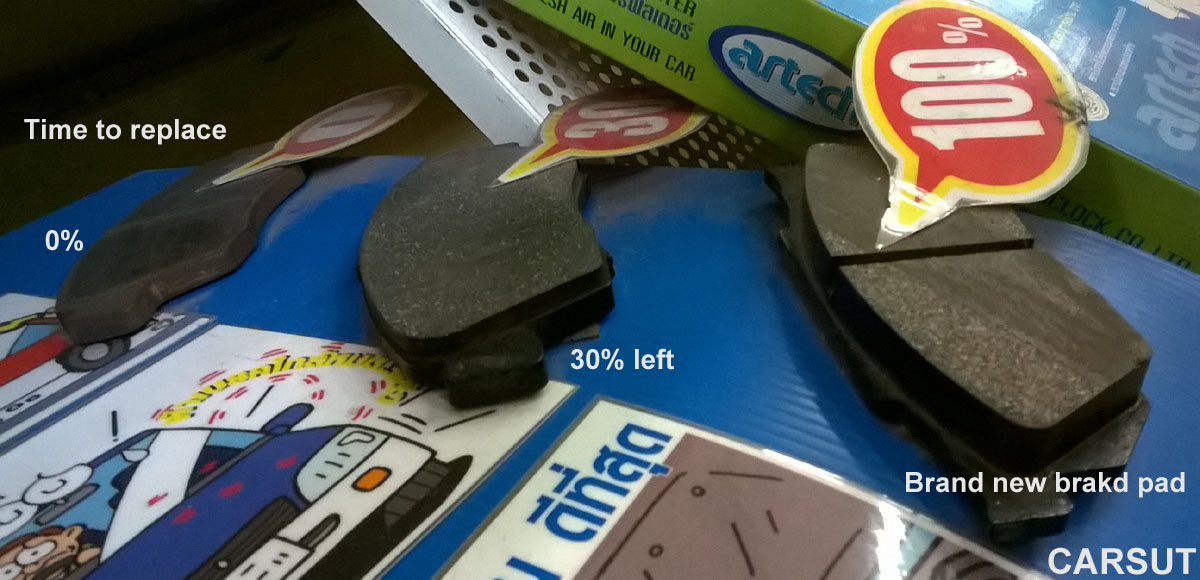
    6. Brake pads

    It is cool to see a car accelerates from 0 to 60 mph in a few seconds but it is also important to be able to stop a car from 60 to 0 mph. Check your brake pads and see if they need to be replaced. See also: how long do brake pads last.
    brake pads

    7. Replace your windshield wipers and washer fluid

    It is tough to drive in the rain during winter time especially if you are on the road late at night. Visibility levels are definitely low and it is recommended to replace your wipers with silicon wipers if they are in bad conditions. Silicon wipers are stronger and they often last longer. Also, you are suggested to use washer fluid with an antifreeze solution.

    8. Keep a set of emergency kit in your car

    Anything can happen during winter because the weather is cold and the sky is always dark. The best way to combat with winter is to keep a set of emergency kit inside your car such as flashlights, hydraulic jack, wrench, spare tire, emergency warning triangle, extra bottles of engine oil, brake fluid, coolant, blankets, boots, bread or food as well as tools to change out a flat.

    9. Always pump your fuel tank full

    In our car maintenance guide, we often mentioned that low fuel level will lead to many problems. Fuel pump failure is just one to be mentioned. Cold weather can cause condensation to form on the walls of a near-empty gas tank, and soon water will drip down into the gas. As water is heavier than gasoline, it might travel into fuel lines and then all the way to your car engine. This will not burn the engine but it will burn your wallet.

    10. Use antifreeze

    Consider to put a right amount of antifreeze in your radiator. A 50:50 ratio is the ideal amount. Antifreeze can keep fluids from freezing at temperatures as low as -34 degrees Fahrenheit (-36.67 degrees Celsius). Pre-mixed Antifreeze is cheap and they are available almost everywhere including gas stations and some grocery stores.

    That’s the top 10 things on how to winterize your car. Please leave a message with the comment features if you think something important is missed out.

  • How Long Do Brake Pads Last

    How long do brake pads last? This is a question without a definite answer. This is because the lifespan of brake pads is depending on your car transmission types (automatic transmission or manual transmission), area you are living, and most important, your driving style as well as other factors. Ask yourself the top 5 questions here and you will realize how to make brake pads last longer.

    brake pads

    How do you drive

    Your driving behavior is the most important factor that determines how long can your brake pads last. Your car brake pads erode faster if you are a high speed driver. This is because it takes more kinetic energy to stop a car from 100 mph to 0 mph compared to 40 mph to 0 mph. Besides, people who often brake very hard will see their brake pad rub away faster. So, learn how to drive a car properly can save your brake pads life.

    Where do you use the car

    If you are living in a hectic city with a lot of cars on the street, it requires a lot of stop-and-go driving. In this case, brakes are applied regularly and that means it won’t last longer compared to someone who drives the same car in a less traffic area.

    What type of brake pads you use

    You should find out what type of brake pads you are using if you want to know how long do brake pads last. Generally, there are four types of brake pads available in the market and they are organic, semimetallic, metallic and synthetic. Each of them has a different lifespan and price. Organic brake pad is made of non-metallic fibers. It has the best stopping power but that also means it has the shortest lifespan. Semimetallic brake pad is made of organic material and metals therefore it is harder and better for heat resistant. As for metallic brake pads, it is mainly used for motorsport. Synthetic brake pad is also known as ceramic pads. This type of brake pads is lighter, stronger and more expensive than others but they last longer. Ceramic brake pads are commonly seen on high performance cars such as Ferrari, Lamborghini, Pagani and others.

    What is your transmission types

    Your car brake pads can last longer if you drive a manual car and know how to shift gears to control your car speed. Things can’t be changed for people who drive an automatic car. Also, your brake pads will wear out very fast if you often make an automatic car tires spin because of the friction in between the brake pads and brake disc is high.

    How often do you use your car

    Your brake pad will last for 10 years or more if you only drive it once a month and travel 10 miles from where you live. Obviously, your brake pads are not going to last long if you drive more than 100 miles to your work everyday. Also, your brake pads wear out faster if you often have a lot of passengers in your car because it uses more force to stop a heavier car. Empty your trunk and that can save your brake pads life as well as giving you a better gas mileage.

    How to make brake pads last longer

    In general, a set of brand new brake pads that works with disc brakes can last in between 25,000 miles and 60,000 miles (40,000 km and 96500 km). The variables are so wide and it is an indefinite science. In conclusion, how long do brake pads last has nothing to do with the pads directly. It is very much related to your driving behavior. It is time to change your driving habits if you feel you are changing your brake pads very often. It is vital to understand cars and drive better.