advertisements
  • Isuzu D-Max vs. Mazda BT-50

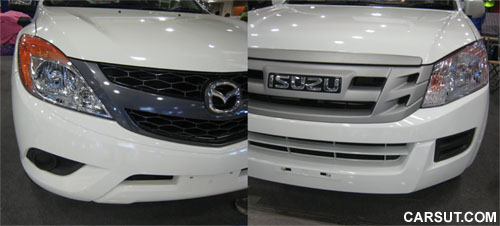
    Mazda BT-50 and Isuzu D-Max
    The Isuzu D-Max and Mazda BT-50 may not be competing head-to-head or foot-to-foot in the marketplace but there is a necessity to discuss both their strong points and weak points. Let’s start with the more popular Isuzu D-Max (known as Chevrolet Colorado in the U.S.) which has been in the market for a longer period compared to the BT-50. It was first introduced in 2002 and it has been in the market for more than a decade. The Mazda BT-50 (Ford Ranger) came later in 2006 but it has become one of the main choices when buying a pickup truck.

    Performance and Power

    Isuzu D-Max
    The Isuzu D-Max Pro features a 2.5LS in-line 4-cylinder direct injection diesel turbo engine that delivers 58kW at 3900 rpm and 176 Nm of torque at 1800rpm. Using independent double wishbones with torsion bar springs and stabilizer in the front and semi-elliptical leaf springs in the back, the vehicle’s rigidity is a lot better compare to the previous generation.

    Mazda BT-50
    The Mazda BT-50 is fitted with a 2.5L 4-cylinder 12-valve SOHC indirect injection turbo engine that delivers 80kW at 3500rpm and 257 Nm or torque at 2000rpm. As for the suspension, Mazda uses independent double wishbones with torsion bar springs in the front and rigid leaf spring in the back.

    Design and Reliability

    Isuzu D-Max vs Mazda BT-50
    The D-Max is made available in either two doors or four doors. The four-door version can carry up to five adults comfortably as the leg room for the rear seats is roomy. The 2+2 door gives an easy way for rear passengers to get in and out. Unlike what you see in the BT-50, it has a very limited space at the back of the front seats. The jump seats in the supercab are ridiculously small and it seems enough to fit a child but not an adult. With only one door at each side, the rear passengers may find it difficult to get into the car.

    Mazda BT-50 rear seat
    (Rear space for Mazda BT-50)

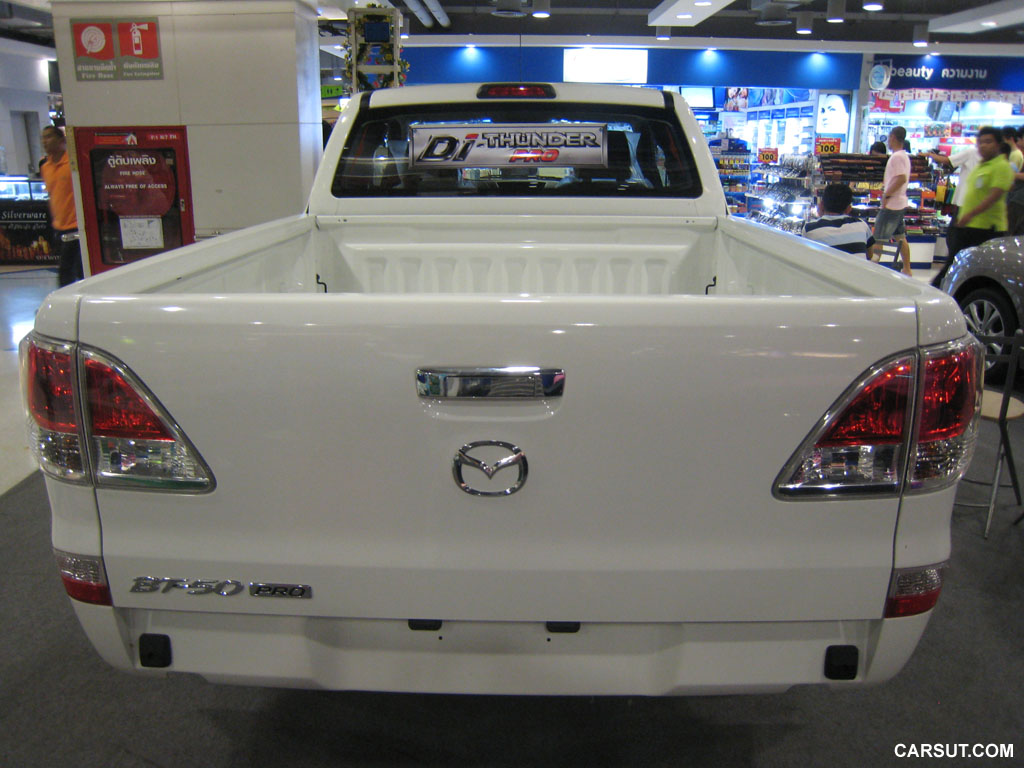
    The overall length for the D-Max is 5030mm and 5169mm for the BT-50. So where does the extra length for the BT-50 go to? The BT-50 has a bigger cargo space compare to the D-Max. The BT-50 is more suitable for hauling heavier loads or performing other functions compared to the D-Max. However, the D-Max is more reliable as a family pickup and also capable of hauling loads. It depends on the buyer’s choice.

    Isuzu D-Max rear seat
    (Isuzu D-Max rear seat)

    The D-Max has an overall width of 1800mm while the BT-50 is 1807mm, a difference of only 7mm. Compare both car heights, the BT-50 is slightly taller at 1762mm and the D-Max is 1735mm.

    Weight

    Vehicle Gross Vehicle Weight (kg) Seating Capacity
    Isuzu D-Max 2650 5
    Mazda BT-50 2800 2+2 small jump seats

    Interior

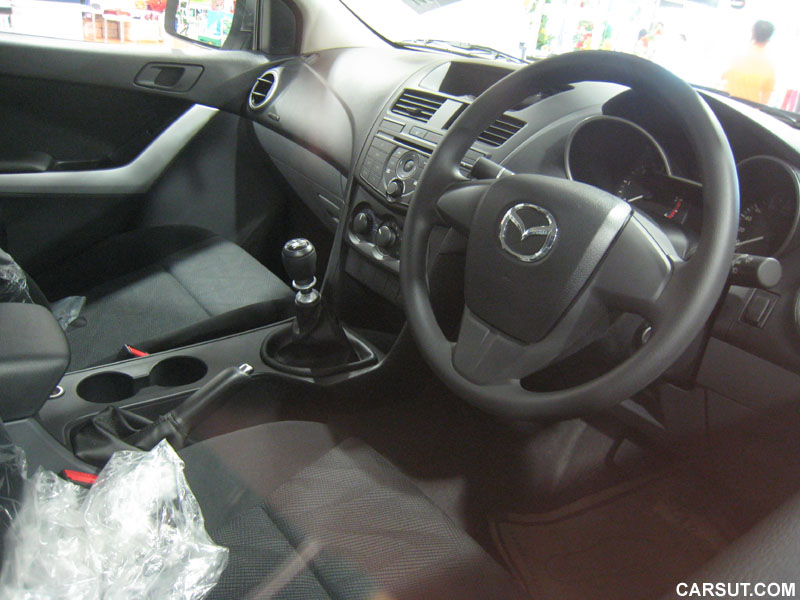
    The interior of pickups often does not look nice. The interior of the D-Max looks mediocre and the steering wheel looks outdated although it has been redesigned. The Mazda BT-50 is about the same but the dashboard and interior design does not look like a typical pickup truck. The gear knob is designed to look slightly cyber and the gauge lights are pretty too.

    Fuel Consumption

    Vehicle Fuel Consumption (MPG) Fuel Tank Capacity (Liter)
    Isuzu D-Max 18 city/25 highway 76
    Mazda BT-50 22 city/27 highway 70

    Isuzu D-Max’s characteristic: Fog lamps with bezel, oval tube aluminium side steps, LED high mount stop lamp, door visors, rubber mats, reverse sensors, and pro-lid. You can also get a better version, the Isuzu D-Max V-Cross.

    Mazda BT-50’s characteristic: Five-point grille, powerful-looking alloy wheels, rear combination lamp, and with many chrome-plated parts.

    Price

    • Isuzu D-Max: RM81,129.40.
    • Mazda BT-50: RM88,170.00.

    Their competitors or similar cars: Toyota Hilux, Nissan Navara, Mitsubishi Triton, Ford Ranger, and Chevrolet Colorado.

    Isuzu D-Max images

    Isuzu DMax Isuzu D-Max rear cargo Dmax interior Isuzu D-max logo

    Mazda BT-50 images

    Mazda BT-50 Mazda BT-50 Cargo Mazda BT-50 interior Mazda BT50 side view

    After reading the above comparison of the Isuzu D-Max and Mazda BT-50, which do you choose?
  • Toyota Camry: A Review On An Established Brand

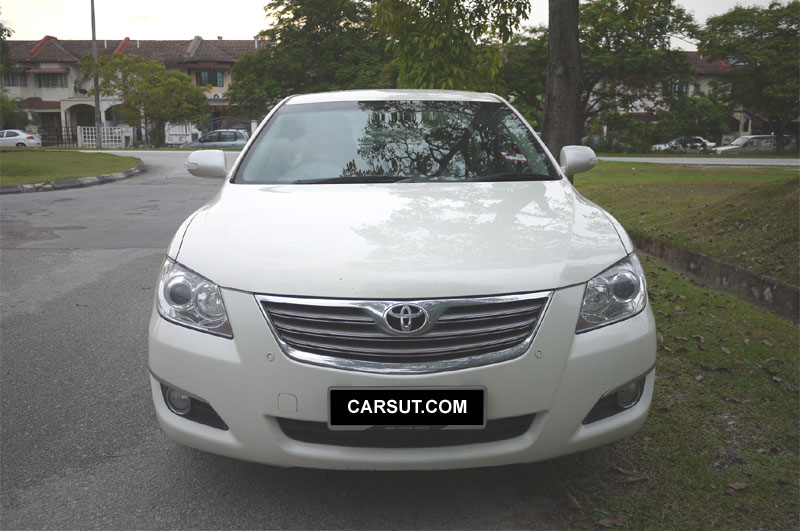
    Toyota Camry
    We were given a chance to get our hands on the best selling cars inAmerica, the Toyota Camry. The owner, Jack Dawson, a 36-year-old business owner shares with us his experience driving a Camry and also the maintenance fees he paid for the car over the years. Jack purchased the car in 2009 and up to date, the car has run 52,000 km at the time we reviewed it. There are rumors that 200,000 km for a Toyota Camry is nothing, it doesn’t hurt the car. Today, we will test drive the car and see if the rumors are true.

    Jack’s Camry is a 2009 model. It is the 2.4V full specs variant which features the 2AZ-FE engine. Jack has a philosophy; if someone wants to spend over a hundred thousand for a car, why not just throw in another thirty thousand to get a better engine, better performance, better interior, and more features? That is the reason he chose the 2.4V instead of the cheaper version 2.0G or 2.0E.

    The 2AZ-FE is a 4-cylinder 16-valve DOHC engine with VVT-i. The 2.4-liter engine delivers 167PS of power at 6,000 rpm, and has a maximum torque of 224Nm at 4,000 rpm. Well, that’s all written in the brochure and let’s put our hand on it and see if it is really satisfying.

    Toyota Camry 2.4V Road Test

    Toyota Camry

    As usual, we will ask the permission from the owner if we are allowed to “rape” the car a little. Jack is an understanding person and he allowed us to do whatever we like with the car. We brought the car to an expressway together with the owner and tried it up till 185 km/h (112 mph). We felt safe up till 165 to 170 km/h on a straight road but we started to feel a little uncomfortable to go beyond this speed with so many cars around. We slowed down when the car reached 185 km/h. The reason is we were testing the car on an expressway but not in the track. However, we felt there is a little leeway from the steering when the speed reached 180 km/h. Other than that, everything else worked perfect; the car performed really well at high speed. It is not only written in the brochure but the car itself proved it.

    We test the car again for cornering, parallel/side parking, and also emergency braking. The Camry runs smooth when negotiating sharp corners. The emergency brake is also satisfactory with the Anti-lock Braking System (ABS), Electronic Brake-Force Distribution (EBD), and Brake Assist (BA).

    As for the parallel parking, drivers below 160cm (5’2) may find it difficult to drive the Camry compared to the Honda Jazz. Although the Camry features front and rear parking sensors with wing mirror, a short person will find it difficult to estimate the position of the car. The XV40 is 4,825mm in length, 1,820mm in width, and 1,470mm in height. For people who are taller than 160cm, it is definitely a joy to own this car.

    Toyota Camry Maintenance Cost

    2009 Toyota Camry

    Jack has been maintaining the car according to the Owner’s Manual and repair guide. In order to maintain the car in the best condition, Jack sends the car toToyotaservice center based on the maintenance schedule and never walked into any other workshops. According to Jack, here is what he has spent for the car over the years.

    No Price (RM) Description
    1 97.50 First service
    2 97.20 Second basic service
    3 63.60 Third basic service
    4 268.20 Fourth basic service
    5 2860 New set of wheels
    6 467.20 Engine oil, oil filter, and basic service
    7 178.80 Alignment and balancing
    8 330 Safety lock
    9 150 Steering lock
    10 1260 Four tires
    11 615.50 Spark plugs, distributors points, drive belts (including air-cond belts), wiper blades, brake lining and pads, filters, refrigerant, receiver drier, lubricants and fluids.
    12 275 Engine oil and oil filters
    13 206.95 Engine oil and oil filters

    Fuel Consumption

    21 city/31 highway mpg or 8.9 city/13.2 km/liter.

    What is good about the car?

    It is easy to sell it off when you want to change to another car. The Toyota Camry has a high resale value. It is a popular car and it is also a car that many consumers will think of buying. The cabin ambience is first-class at 130 to 150 km/h. It is also spacious enough to carry six adults comfortably. Spare parts are available almost everywhere across the country; either new or used parts. As for the boot, it is big enough to fit a mid-size bicycle.

    Toyota Camry rear boot

    What is not so good about the car?

    No vehicles are 100% perfect, so are the Camry.Toyota recalled the Camry several times over the years in the U.S. because of some defects. The most recent recall affects the 2007-2010 models. Although the interior is nicely crafted, we notice there are some parts made of low-quality plastics.

    Price

    • MalaysiaRM175,007.10 for Toyota Camry 2.4 V
    • United States: MSRP from $23,000
    • Thailand1,449,000 baht for Camry 2.4 G; 1,619,000 baht to 1,799,999 baht for Camry Hybrid ECVT; 1,699,000 baht for Camry Hybrid Extremo; 2,909,000 baht for Camry 3.5 Q.

    Toyota Camry’s competitor or other similar cars: Honda Accord, Chevrolet Impala, Ford Fusion, Mazda 6, Lincoln MKZ, Toyota Camry Solara, Holden Apollo, Toyota Scepter, and Toyota Vienta.

    “My ass is pretty comfortable on the leather seat”, said Jack. Well, it is a wonderful sedan car that even comforts Jack’s ass.

    Toyota Camry Toyota Camry Toyota Camry interior Toyota camry interior and steering

    Toyota Camry interior Camry gear knob Toyota Camry rear seat Camry boot

  • Learning To Drive An Automatic Car

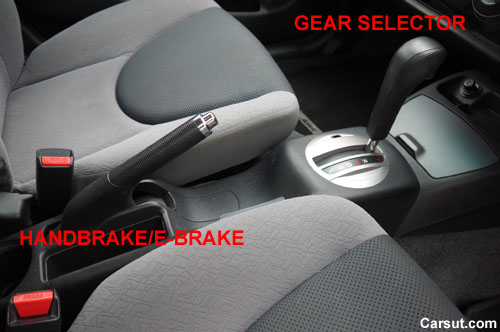
    Learning to drive an automatic car will be faster and easier compared to manual transmission car. This is because the driver is not required to shift the gears manually. The car will go forward when the “D” (Drive mode) is engaged and it will reverse when the “R” mode is engaged. No clutch control is needed and you do not have to shift the gear manually. It is easier because you will only have to remember the gear knob, handbrake (e-brake), pedals, and steering wheel.

    Understand an automatic transmission car

    automatic pedals

    Once you are on the driving wheel, adjust the seat to a position where it fits you the best. There are only two pedals all the way down from the steering wheel. On the right is the gas pedal (petrol pedal) and on the left is brake pedal. If you are driving a RHD (Right-Hand-Drive) car, the gear knob and handbrake will be on your left and you need to use the left hand to control it. If you are driving a LHD (Left-Hand-Drive) car, the gear knob and handbrake will be on your right and use the right hand to manipulate it. Adjust the rear view mirror and two side mirrors so that you can clearly see if there is any vehicles coming from the back or both sides.

    Automatic car

    Study the gear selector

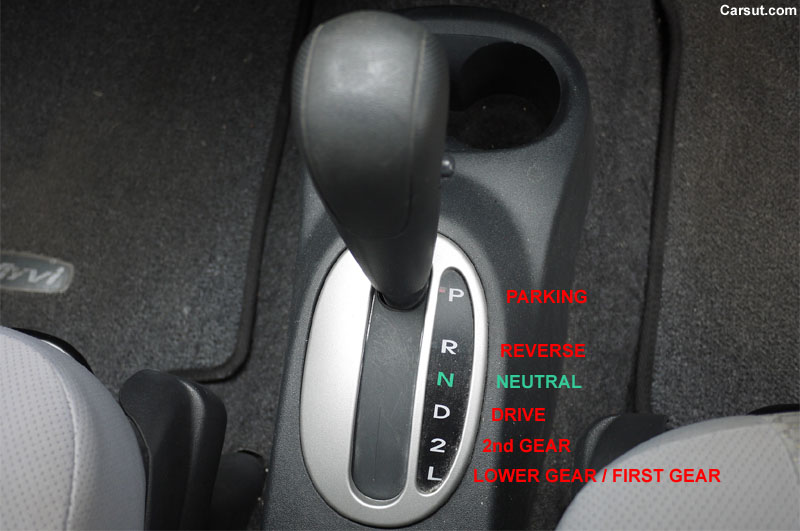
    A standard automatic gear selector has the basic four markings:

    P: Parking. Select P when you park your car.

    R: Reverse. Select R when you want to reverse the car.

    N: Neutral. Select N when you want to push the car or tow it.

    D: Drive. Select D to drive the car.

    Some cars will have extra markings other than the basic four above. It depends on how many speeds the automatic transmission has. Some cars like Honda or Toyota are equipped with five-speed automatic transmission. It is to allow the driver to have a better control to the car and sometimes it is useful to achieve slightly better mileage when driving in cities with heavy traffic jams. These are other automatic gear patterns found in some cars.

    Honda Civic Honda Fit Mini Cooper Others Others
    P
    R
    N
    D
    D3
    2
    1
    P
    R
    N
    D
    S
    L
    P
    R
    N
    D
    P
    R
    N
    D
    S
    P
    R
    N
    D
    L

    Automatic gear selector
    Some automatic gear patterns

    D3 or 3: This mode restricts the transmission to the first three gears, which means no matter how hard you throttle the gas pedal; the transmission will not change to fourth gear.

    D2 or 2 or S (Slow): Shifting into this mode means the transmission will be locked in second gear. The car will start to run in first gear but only limits up to the second gear. It is very useful for driving up hill or driving in adverse conditions. It is also useful to increase the engine braking effect during downhill driving.

    D1 or 1 or L (Low): Shifting into D1 or L indicates that the car will only run in first gear. This mode should only be engaged for towing, uphill, or downhill, otherwise the engine will be damaged if the RPM is too high.

    Overdrive or OD or ‘O/D OFF’: This mode is only available in some cars. It can be found as a small button attached to the gear knob or located somewhere around it. The car will shift to lower gear when you turn it on. Use it when you want to over take or in circumstances that require a lower gear.

    Step by step to drive an automatic car

    Step 1: Make sure the handbrake is engaged and the gear knob is positioned at P (Parking). Some cars cannot be started if the gear is not in the P mode. Step on the brake pedal with your right foot and turn on the ignition to start the engine. There are some automatic cars that can only be started if the brake is applied.

    Automatic transmission

    Step 2: Press your right foot on the brake pedal and make sure the brake is still on. Shift the gear selector to D mode. Check if your gear knob has a button that locks the transmission. If there is, you will need to press it to shift the gear selector. You may feel the car jerking slightly on an old car.


    Shift the gear selector to “D” (Drive).

    Step 3: Look around to see if it is safe to take off. Then release the handbrake and lift your foot slowly off the brake pedal.

    handbrake

    Step 4: Shift your right foot to the gas pedal. The more you step on the gas pedal, the faster the car will go.

    Step 5: Slow down the car. To slow down the car, move your right foot from the gas pedal to the brake pedal. Step down the brake pedal gently and the car will stop.
    Step on brake pedal

    Step 6: Making turns. When it comes to junctions, slow down the car and stop the car before the stop line if it is necessary. Turn the steering wheel towards the desired direction and step on the gas pedal gently.

    Step 7: Stop at traffic. From time to time, you will have to stop the car at traffic. If the traffic is crawling (stop for a few seconds and then move for a few seconds), step on the brake pedal to temporarily stop the car and then engage the gear to N. If the traffic is heavy or the traffic lights just turn red (you are required to wait for a long time), select N and apply the handbrake firmly. This is to secure the car from being shoved if you are hit by any vehicles.

    Step 8: Emergency brake. You should step on the brake pedal as hard as you can during emergencies. During the millisecond moments, make sure there is no vehicle trailing too close from behind.

    Step 9: Reverse. The steps to reverse a car are similar to those of running the car in first gear. With the brake on, engage the R (Reverse) gear. Release the handbrake and lift your foot from the brake pedal gently. The car will go reverse slowly and step harder on the accelerator if you want to go faster.

    Reverse gear

    Tips:

    • Never EVER use both feet to drive an automatic car. It is incorrect to use the right foot for gas pedal and the left foot for brake. Use only the right foot to operate both pedals.
    • Never use the handbrake to stop the car. The correct way to stop the car is to step on the brake pedal.

    Click here to see the video of How To Drive An Automatic Car.

  • Justin Bieber turns 18 with a $100,000 Fisker Karma

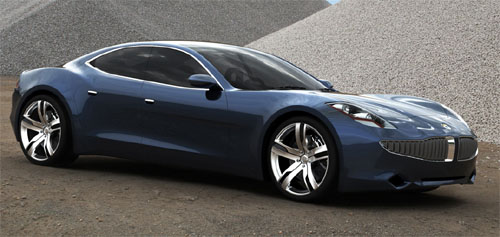
    Fisker Karma

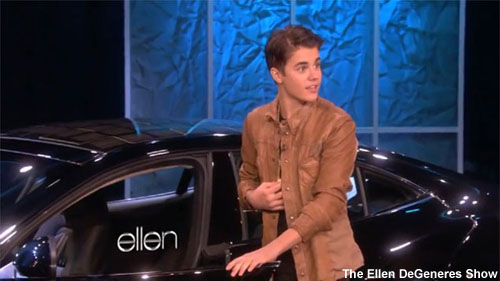
    Justin Bieber turns 18 today, and yes, he is legal to drive now. The Canadian singer who loves cars so much celebrated his 18th birthday on Thursday with an appearance on ‘The Ellen DeGeneres Show’. During the show, the singer’s manager, Scooter Braun walked out and presented him with a $100,000 Fisker Karma, a plug-in hybrid luxury sports car. And of course, this was part of Usher’s idea too. It is a huge surprise for Bieber and he may never ever forget about this birthday present.

    Scooter Braun mentioned that he always yelled at Justin and told him not to get anything flashy. However, Fisker Karma is a flashy car and Braun is kinda broke his own rule. “We wanted to make sure, since you love cars, that when you’re on the road you are always looking environmentally friendly. And we decided to get you a car that would make you stand out,” Braun says to Bieber. “I think you know where I’m going, and you’re kind of freaking out right now. That’s a Fisker Karma.”

    Justin Bieber's car
    “That’s mine? That’s crazy! This is amazing!” Bieber exclaimed.

    The talk-show host, DeGeneres also presented Bieber with very meaningful presents, a windshield sunshade with both their faces and a bobblehead.

    The Fisker Karma is an eco-friendly car that features a pair of electric motors pumping a total of 403 hp and a maximum of 1,300 N.m of torque, more than the fastest car in the world, the Bugatti Veyron at 1,250 N.m. If Justin is going to step on the accelerator as hard as he can, the Karma is capable of reaching 60 mph from standstill in just 6.3 seconds. And if Justin continues to step on the gas pedal, the Karma is capable of reaching a top speed of 125 mph (201 km/h).

    Fisker Karma

    The power is either draw from a 22 kWh lithium ion battery inside the car or from a 175 kW generator spun by a 2.0-liter Turbochared Ecotec engine. The cool neon-look-alike roof is actually a solar roof. It has the ability to generate a half kilowatt-hour a day and it is estimated to provide an extra four to five miles depending on the sunlight.

  • Ferrari F12 Berlinetta unveiled: Fastest Ferrari to date

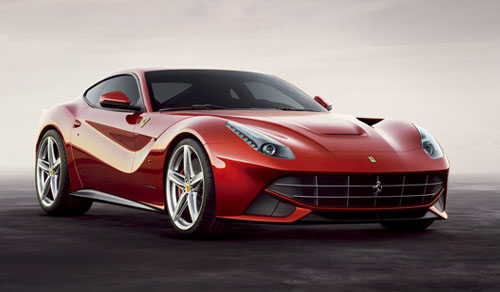
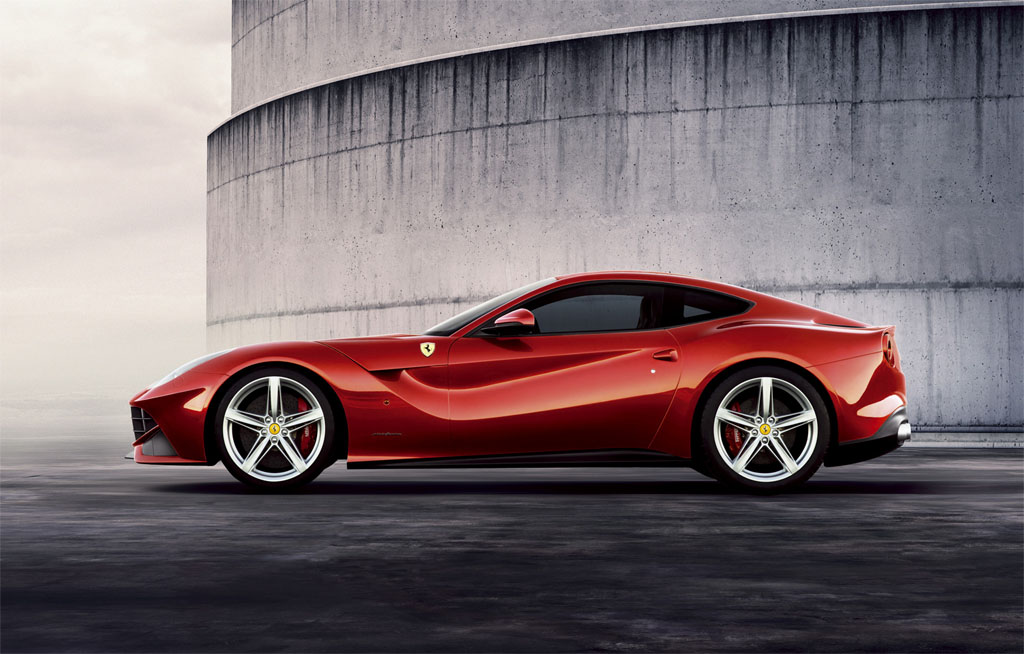
    Ferrari F12 Berlinetta
    Waiting for a supercar to be revealed is always like watching a strip show. We have been waiting for it since morning when we saw Ferrari’s official website reminding their fans that the new Ferrari will make its debut at 01:00 pm CET. And now, the cover is removed from the car, the cloths are off the strippers! This is it, this is the Ferrari F12 Berlinetta that will replace the Ferrari 599 GTB Fiorano.
    Ferrari F12 Berlinetta
    You probably have seen this before through some leaked photo in the internet. But you are not sure whether the previous photos are real, and we can tell you what you are seeing is real! Previously many car enthusiasts thought it is going to be named F620 GT but it turned out as F12 Berlinetta. The new Prancing Horse features a 6.3-liter 65-degree V12 engine that pumps a maximum of 740 CV at 8500 rpm and 690 Nm of torque at 6000 rpm. The wheelbase is shorter than the 599. Thanks to the new aluminium-intensive spaceframe, the weight of the F12 is 3,362lbs which is lighter than the aging 599.
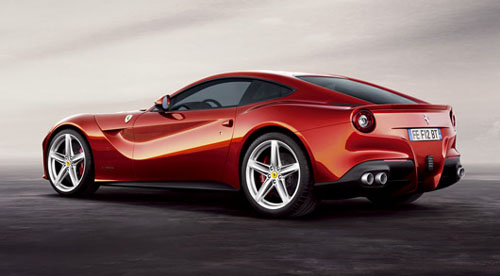
    Ferrari F12 Berlinetta rear view
    For anyone who can’t take roller coaster, don’t buy this car because you will not enjoy the 3.1 seconds it takes from 0 to 100 km/h (62 mph). Coming just days before the Geneva Motor Show, the F12 boost a bloody fast top speed of 340 km/h (211 mph), making it the fastest Ferrari ever built. It also takes a mere 8.5 seconds from 0 to 200 km/h (124 mph). Besides, the F12 Berlinetta has a lower and more rearward center of gravity with a redesigned suspension and gearbox. With all these reasons, this supercar goes very fast, and really REALLY fast.
    Ferrari F12 Berlinetta interior
    Two days ago, we had just put our hands on the Ferrari 458 Italia and we hope we will be putting our hands on the F12 at the coming Geneva Motor Show. Here is the official rendering photos and the official technical specifications.

    TECHNICAL SPECIFICATIONS

    Engine
    Type: 65-degree V12
    Total displacement: 6262 cc
    Maximum power output: 740 CV at 8500 rpm
    Maximum torque: 690 Nm at 6000 rpm

    Dimensions and weight
    Length: 4618 mm
    Width: 1942 mm
    Height: 1273 mm
    Dry weight: 1525 kg*
    Weight distribution: 46% front, 54% rear
    Weight-power ratio: 2,1 kg/CV

    Performance
    Maximum speed: over 340 km/h
    0-100 km/h: 3.1 seconds

    Ferrari F12 Berlinetta Ferrari F12 Berlinetta Ferrari F12 Berlinetta