Tag: buying

  • What do CBU and CKD mean in automobile?

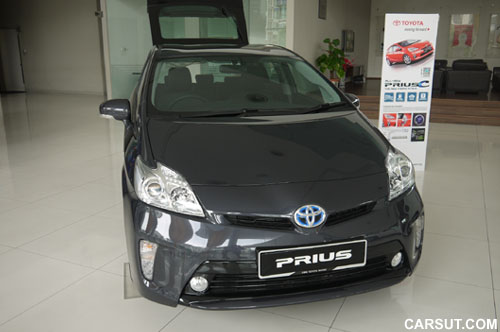
    Toyota Prius
    A CBU Toyota Prius

    Often when you are buying a new car or reading the information about your desired cars, you may have come across some weird terms such as CBU and CKD. These terms usually appear in some countries that impose excise duty on imported vehicles such as Malaysia, India, China, and Thailand. What is actually CBU? What does CKD means? In this article we will explain what they mean and the differences between CBU and CKD.

    Generally, CBU and CKD are terms used to describe the way of importing a vehicle into the country. CBU stands for Complete Built Up and CKD stands for Complete Knock Down.

    CBU – Complete Built Up

    A CBU import means a vehicle is completely built out of the country. The vehicle is tested and it can be driven once it lands on the shores. If a vehicle is tagged as CBU import, it means the vehicle is imported to the country as a whole piece. A CBU import does not mean that the vehicle is 100% built in its origin country. For example, a CBU Honda Civic imported to Malaysia can be assembled in Japan (Honda’s origin country) or some other Honda plants in either Thailand or Indonesia. However, most of the time but not always, the import will be done by picking the nearest country. Most Hondas in Malaysia are imported from Thailand due to the geographical location. The quality of a CBU vehicle very much depends on the QC (Quality Control) of the plant.

    CKD – Complete Knock Down

    A CKD vehicle means a vehicle is assembled locally using all the major parts, components, and technology imported from the country of its origin. Government imposed excessively high taxes on CBU vehicles to encourage foreign car manufacturers to build factories and produce their vehicles in the country. This would help the country’s economy as well as to increase the employment rates. This is the reason why we see more and more CKD vehicles available in the country.

    CBU vs. CKD

    The biggest difference between CBU and CKD is the taxes. A CBU unit could have cost 30% more of a CKD unit. However, quality of the vehicle is the first concern of consumers. A Mercedes-Benz completely built in Sindelfingen plant will definitely have some difference with other Mercedes-Benz’s plants. This has also explained why the Sindelfingen plant was presented with the J.D. Power Award by the renowned U.S. market research institute J.D. Power and Associates.

    Popular CBU vehicles in India:

    Aston Martin DBS, Audi R8, Bentley Continental GT, BMW Z4, Ferrari 458 Italia, Fiat 500, Honda Civic Hybrid, Honda CR-V, Lamborghini Aventador, MINI Cooper, Nissan GT-R, Porsche Boxster, Toyota Prius, Toyota Camry, Volkswagen Tiguan, Volvo S80, and others.

    Popular CKD vehicles in India:

    BMW 3 Series, BMW 5 Series, Ford Figo, Ford Fiesta, Chevrolet Cruze, Chevrolet Tavera, Honda Brio, Honda Jazz, Honda City, Honda Civic, Honda Accord, Hyundai Sonata, Hyundai Accent, Suzuki Swift, Nissan Sunny, Toyota Corolla Altis, Toyota Fortuner, Volkswagen Polo, Volkswagen Jetta, Volkswagen Passat, and others.

  • Step 10: Life after having a car

    Peep car from window
    It is necessary to understand the life after having a car. This is because there are many things you may not expect and you need to prepare for it before buying a car. Some new car owners will walk to the window and peep at the car once awhile to make sure it is still there. “What the?” Don’t be shock; it is a truth based on the results from our research. There could be many reasons, the owner is afraid of the car being stolen, worry about the car being scratched or just look at it to satisfy themselves. For some people, spending a huge amount of money in one shot to buy a depreciating object (car) is hurting, so they will definitely try to take good care of the car. Other than that, these are several things you may not know about having a car especially for the first time car buyer:

    1. Someone regret it. If you did not manage your budget properly as mentioned in Step 1, you may start to regret buying the car when it starts to suck money out from your pocket every month for the installments.

    2. Extra money for extra accessories. To celebrate the new purchase, people often spend extra money on accessories to decorate the car. This includes head rest, floor mat, new carpet, steering wheel cover, windscreen tint, car seat covers, and many other things that may cost few thousand dollars or more. Some people will also spend a few hundred dollars for high quality steering lock or transmission lock as a theft deterrent. Furthermore, car wash and car detailing are something which will keep costing money.

    3. Extra protection. Do you notice that there are many bottles sitting in the store room? Detergent to wash car, car wax kit, polishing kit, fluid for windscreen protection, and tire dressing are extra money for a car owner. A person who takes public transport does not need all these things.

    4. Extra trip. First time car owner will find excuses just to drive the car out because they want to drive it. Well, it doesn’t really matter as long as you enjoy it.

    5. Parking Charges. You may need to pay parking fees wherever you park your car. For those who are staying in apartments or condominiums, there will be monthly parking charges. Do take this into your calculations before buying a car.

    6. Car maintenance. There is always a maintenance fee, for example, engine oil, oil filter, car batteries, tires, and others. The maintenance fee for cars with bigger engine often cost higher.

    7. Customize your own car. Other than buying aftermarket accessories to decorate the car, some car enthusiasts will customize their own car. Sound systems upgrade, sport wheels, customized dashboard or extra gauges to make the car look cool.

    These are some of the opinions from our research:

    Jonathan Blanchfield said: “Buying a used car is very complicating. I will prefer a new one to avoid all the hassles.”

    Jeremy Teoh said: “I prefer a new used car because I do not want to throw all my hard-earned money into depreciation.”

    Isabella Joel said: “I am a girl, I do not understand a lot about mechanical things and car maintenance, buying a new car seems to be more practical for me.”

    Jonathan Lipnicki said: “I love cars, I love new smells, I love new features but I prefer a used car. With the same amount of cash, I prefer a used branded car than a new cheap car.”

    What is your choice then?

    Having gone through what you have to go through from Step 1 to Step 10, you should get your new car now. Most people find having a car is more convenient, and yes, it is. What you need to do is to enjoy the ride!

    Carsut’s car buying guide is written by Howsen who is an experienced car dealer. Thanks to people who participated in this research and contributed their opinions in making this buying guide a success.

    • Suming – a used car dealer since 1983.
    • Peter Czech – a mechanic who specializes in Mercedes-Benz, BMW,Toyota, Honda, and Suzuki.
    • Phoenix– an insurance agent who has been dealing with car insurance for more than 10 years.
  • Step 9: Making the deal

    BMW Mini Cooper
    It comes to the deal when you have decided to buy a car. Do not be over excited with the new car you are buying and overlook some other important things including insurance, loan rates, processing fees, registration fees, ownership endorsement fees, extended warranty and sales tax which vary from state to state. Do not forget about incentives and rebates if you are buying a new car. If you are buying it with your company name, these fees could be doubled.

    Steps to deal a new car

    Ask for a complete quotation from the salesperson who arranged the deal with you. Bring the quotation home and view it in a stress-free environment if you are not in a hurry to seal the deal. In that way, you can clearly review the amounts and see if other expenses are too high. If the salesperson is giving you the best car price but with sky high insurance or loan rate, you can still buy the car from him but not the insurance and loan. Double check the invoice and see if there are redundant charges such as processing fees, handling fees or miscellaneous fees. All these refer to the same thing. You can request the dealer to have these extra fees removed. If they refused to do so, look for another dealer.

    If there is no problem on the invoice, you can request the salesman to deliver the car to you at your convenience. You will have to check the car properly before signing the contract. Make sure you have gone through the car from head to toe before you nod your head to confirm the car. A person who had just bought a new car told Carsut that the dealer who delivered the car to his house showed him how a thief can open the car and drive it away without the key. They showed the whole process in front of him and tried to sell him additional security items to protect the car. Besides, a salesperson will always take this opportunity to sell you extended warranty, steering lock or a GPS locator. We recommend you turn down all these things, otherwise it will end up an extra few hundred or few thousand dollars. You may only consider extended warranty when you feel it is really needed in your situation.

    There will be several forms to sign including the loan contract, insurance contract, transfer ownership of your trade-in (if you have one), and new car registration form. DO NOT HURRY! Nothing to rush about. Read every form one by one carefully before signing it. Last but not least, check if all the options and accessories are there when the salesperson passes you the key. If you are buying a full options model, make sure everything is there, for example, paddle shift, GPS system, 18” wheels or special edition body kit.

    Steps to deal a used car

    Things could be easy if you are paying cash for the deal. Make sure what you are getting is the same car that you have inspected (Refer to Step 7.1 Inspect a used car before buying it). Make sure there are no scratches and no parts have been replaced since the day you inspected the car. Compare it with the pictures you took on the inspection day if you are suspicious about the car.

    If you are planning to finance the car, compare to see who is giving you the best rate; dealer, bank, credit union, online lender or some insurance companies that provide car loans. Financing through a bank is highly recommended because it is easier and usually cost less.

    The dealer will prepare all the documents and sales contract for you if you are buying from them. Still, you will need to read through everything written in the contract before signing it. Ask the dealer to amend the contract if you find something is not right.

    If you are lucky to get a great deal from a private seller, you may request the seller to prepare an automobile bill of sale. This is very important because it serves as a legal contract between buyer and seller (Refer to Step 9: Bill of Sale for more details). You can also print it out and use it for the deal. It is either the seller or the buyer do the leg work to transfer the title and registration. You can request the seller to do this before making the payment. In some cases, buyer and seller will have to do it together to have everything transferred on the same day. You will have to make sure you have insurance for the car you bought.

    Last but not least, check again everything from head to toe and compare the car with the pictures you took on the day you inspected the car. If there is nothing wrong, all you need to do is get the key and go for a ride.

  • Step 7.2 Questions to ask when buying a used car

    These are some of the questions to ask before buying a used car. Some of these questions are taken out of our questionnaire we mentioned in Step 1.

    1. What is your monthly budget for a car?

    If the monthly budget is low, consider a cheap used car below $10,000. If budget is not the concern and you are willing to pay anything to get the car you want, you may reconsider buying a new one rather than used.

    2. How many miles you will drive it in a year?

    A used car could not perform better than a new one if you are going to put a lot of mileage on it. If you are putting more than 30,000 miles a month, used car may not be practical.

    3. Are you familiar with car maintenance?

    If you are not, you could probably end up spending more money to maintain it. (more…)

  • Step 7.1 Inspect a used car before buying it

    There is no perfect used car because no one will buy a new car, keep it in the garage, and then sell it. Therefore, inspection is an inevitable process. You can either bring a mechanic or a trusted friend who knows about cars to inspect it. A good used car inspection usually costs between $40 and $100. You can learn some of the basic inspection and check the car yourself before bringing a lemon to an experienced mechanic.

    As we mentioned in Step 7, a vehicle history report is indeed important. Inspection should come after you have ascertained the car is clean from any bad stuff. If the vehicle history report from either Carfax or AutoCheck shows that the car is stolen, totaled, flooded, or involved in any criminal cases before; do not waste time to check on the car and try to look for another one.

    Let’s start the inspection step by step through the checklist here.

    1. Preparation

    Prepare a penny, a plastic coated magnet, torchlight and a digital camera or a mobile phone with built-in camera. The penny is to check the tire tread, magnet is to check the body, torchlight is to inspect dark zone and camera is to record down what you see to prevent the seller from manipulating the parts. Before inspecting the car, make sure you fill up your stomach. Never view a used car with an empty stomach. Arrange with the seller or dealer to view the car during day time, night time is almost impossible to check a car properly.

    2. First look and check the body

    Paint and body: Inexperienced buyer may find this hard but you can still see the differences if a car had an accident before. Look for dented area, scratches, or any collisions. Try to observe the body color. If the color is not consistent, this could mean that the body has been repaired before with a new coat of paint. Newer paint indicates that the part has just been recently repaired. Sometimes metallic or pearl 3K paint is hard to notice. You can use the magnet to check for rust and filled areas. Magnet will not stick to the area that has a major repair. Make sure you do not scratch the car with the magnet!

    dented and scratches on a car

    Body parts: Many parts come in pairs, headlamps, rear lamps, signals, side mirrors, and sport lights. Compare and see if the pairs look alike. If they are not alike, it could mean that the car has been involved in an accident before and one of the parts has been replaced with either new or OEM parts. Open and close all the doors several times. If the doors do not close properly or if it sounds peculiar, the car may have been involved in a collision before. High quality car usually has a pleasing sound when one closes the door. Shake the door and see if there is any sound of a gap. If the car was involved in a serious accident before, the door may loosen. If you are buying an older vehicle, you may need to remove the floor mat and check the floor board (foot board). Sometimes you can find a few holes underneath. Also, look carefully if there is any crack or small holes on windscreen.

    Car boot: Open the boot and remove the spare tire. The main thing to look at is the circle where the spare tire sits. It should be nice and perfect. It could mean the rear was hit by some other vehicle if you find it dented. The picture here shows that the car boot has been knocked before.

    dented car boot

    Odometer mileage: The annual average mileage on a used car should be around 10 to 15K miles (15K to 25K km). You can do your own calculation to judge whether the car is heavily used. A two-year-old car should be between 20 to 30K miles. Think twice about the car if the mileage exceeds a lot more than the annual average mileage.

    Tires: Our eye can tell if the tire is in very bad condition like the image below. Otherwise, use a penny to go through the tire tread. If you can see more than half of the penny or Lincoln’s head, it’s time to replace the tires.

    tire thread

    3. Under the hood

    Check the area under the hood. Use a torchlight to check hidden places that are dark. If there is oil, fluid or battery acid spilled around; it could mean that something needs to be replaced. It can be brake hoses, oil seals, or battery. Check carefully for broken parts like cracked rubber hoses, brake hoses, fuel hoses, or radiator fan. Pull out the dipstick and check the oil level. It must be the correct level. Often, most of these things will look perfect after the dealer has fixed it. Therefore, you need to check everything under the hood again after test drive. A well-maintain engine should look clean and tidy.

    Request the log book from the seller or dealer, compare the VIN (Vehicle Identification Number) or chassis number and engine number with the report you get from Carfax or AutoCheck. Vehicle that does not have a match VIN number is NOT worth buying.

    4. Start the car

    Observe several things when you are at the driver seat. The oil warning light should go off after few seconds. Oil warning light symbol usually looks like Aladdin brass lamp. This is one car dashboard symbol for oil warning.

    engine oil warning light

    Turn on all the buttons and electronics to see if something is not working, for instance, wiper, signals, headlamps, rear heater, air-condition, stereo, central-locking and power window. Observe the smoke color from the exhaust when the car is started. If it is early morning or the car has been sitting in the car park for some time, you may see white smoke. Black smoke or blue smoke indicates burning oil. Bad smell from the smoke could mean the engine is not healthy.

    5. Test drive

    You may not find out the hidden problems if you love the car too much before buying it. Driving below 20 mph in a housing area will not help to identify problems. Arrange to test drive the car at wider road or speedway if possible. At least drive the car up till 60 mph (100km/h). See if anything in the car is shaking or vibrating, for example, steering wheel, stereo, dashboard, or car seat. Try to listen also if the car is making weird noises. All these are symptoms for an unhealthy car.

    Check the transmission. Shift into reverse gear and see if it is working. This step is definitely a must because some cars can only go forward. Try to shift every gear if possible. Some cars, like the latest Honda City, have up to seven gears. Newer car has paddle shift and you should check on that too.

    Observe the temperature gauge. If the engine is overheated just after one round of driving, the cooling system is having problem.

    6. After test drive

    Open the car hood again after the car stops. Do not turn off the engine and monitor for some obvious signs including bad smells, bad smoke, and splattered fluid/oil/coolant. Do not touch anything because it is extremely hot after the drive.

    In conclusion, it is no point to waste a few bucks to send the car for inspection if it did not pass your own inspection with these six steps. Try to test drive the same model from different sellers or dealers and it can roughly tell which is the best. Nothing to lose to test drives a few cars before getting the best deal.