Tag: cars

  • How To Drive An Automatic Car (Video)

    [cvg-video videoId=’4′ width=’500′ height=’333′ mode=’playlist’ /]

    This is a short video to show you how to drive an automatic car in few easy steps. It was taken in HD mode and it can be enlarged. Follow these steps and you can learn to drive a car easily.

    Step 1: Make sure the handbrake or e-brake is engaged and the gear knob is positioned at P (Parking).

    Step 2: Step on the brake pedal with your right foot and turn on the ignition to start the car.

    Step 3: Shift the gear selector to D (Drive) mode and release the handbrak/e-brake.

    Step 4: Shift your right foot to the accelerator or gas pedal and step on it slowly. The more gas you put in, the faster the car will go.

    Click here “Learning To Drive An Automatic Car” for more details with images.

  • Learning to drive a manual car

    Most people find learning to drive a manual car is much harder than an automatic car especially when they need to do a parallel park or drive uphill. Students often fail in these two skills in the driving test. There is a necessity to master these skills not only for the test but also to drive better in your life. Here is the step by step on how to drive a manual car and tips to handle all kind of circumstances in a manual car.

    Understand a manual transmission car

    Manual car

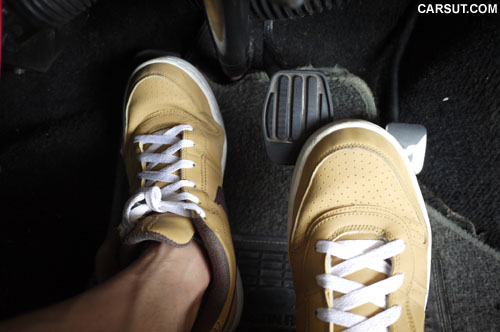
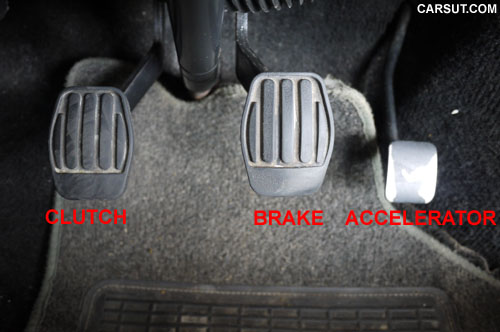
    A manual transmission car has three pedals: on the right is the gas pedal/accelerator, on the left is the clutch pedal, and in the middle is the brake pedal. A clutch is a doorway to shift the gear. No gear can be shifted if the clutch is not applied. Whether it is LHD (Left-Hand-Drive) or RHD (Right-Hand-Drive), you will see these three pedals. For LHD car, you will use your right hand to shift the gear and the other way round for RHD car.

    Study the Stick Shift

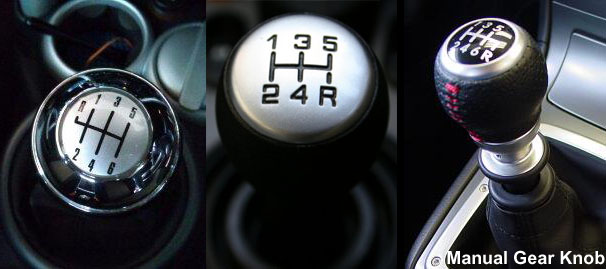
    Stick Shift

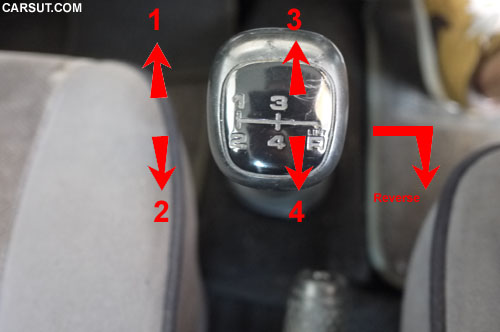
    Most of the manual cars running on the road today are five-speed. Some manual cars like the Honda CR-Z have six-speed while some earlier type has only four-speed. Before driving the car, sit on the driver’s seat, use your left foot to press the clutch to the floor and try to shift every gear to familiarise with it. The numbers indicate the gear and the “R” means reverse gear. Check if your gear knob has a button that locks the reverse gear. Some cars like the Renault Kangoo comes with a lock where you need to press/pull a button to shift the gear into reverse. Once you are familiar with the shifting, make sure you shift it back to neutral (in the middle where you don’t feel the stiffness in the gear stick) before starting the car.

    stick shift pattern

    Step by step to drive a manual car

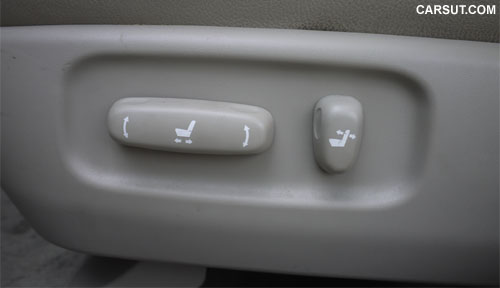
    Step 1: Adjust the driver’s seat to a position where you can fully step down the clutch pedal with your left foot. Your body will move back a little bit when you drive up hill. Therefore, do not slight the seat too far or too close from the pedals.

    automatic seat adjuster

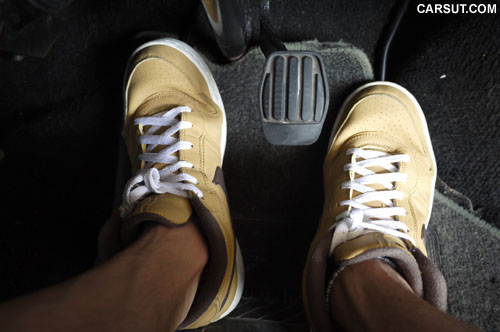
    Step 2: Make sure the gear is shifted to neutral and the handbrake (e-brake) is engaged. Use your right foot to step on the brake and start the car. For better practice, you may also press the clutch with your left foot every time you start the car to avoid the car going forward if the gear is engaged without your knowing.

    manual transmission car

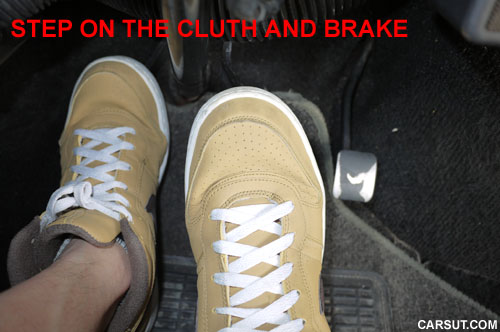
    Step 3: Press the clutch all the way down to the floor and shift the gear to first (1) gear. Look around to see if there are any vehicles coming. If it is safe to take off, release the handbrake.

    Step on the clutch

    Step 4: Release the clutch gently and step on the gas pedal lightly simultaneously. Give more gas to the car or hold the clutch if the engine sounds like it is going to stall. Move your left foot to the foot rest area when the car moves forward.

    drive a manual car step four

    drive manual transmission car step 5
    Step more on the gas pedal/accelerator to go faster

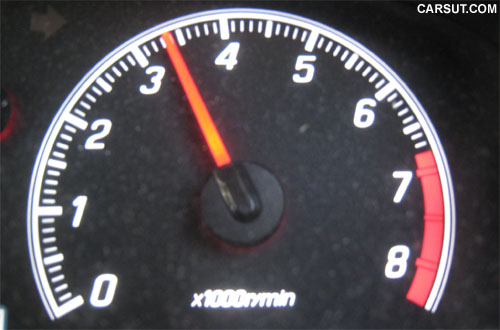
    Step 5: Change gear. An experienced driver knows when to change the gear by listening to the engine sound. A good way for beginners is to look at the RPM gauge. Shift the gear when it reaches about 3000 to 4000 rpm. To shift to second gear, lift the right foot from the gas pedal, press the clutch pedal all the way down and shift to second gear. Release the clutch gently and step on the gas pedal as in Step 4. The more you step on the gas pedal, the faster the car goes. Repeat the same process to shift to other gears.

    3000 rpm

    Step 6: Slow down and stop. Lift your right foot from the gas pedal, use the left foot to press the clutch, and then apply the brake to slow down the car or to stop the car. Once the car is stop, shift the gear to N (Neutral) and apply the handbrake.

    drive manual transmission car step 6

    Tips

    Seating Position. Many people fail in the driving test during uphill because their left foot could not fully reach the clutch pedal. This is because the seat is too far from the pedals. Adjust it to a position where you are able to press the clutch all the way down the floor even your body is close to the seat.

    Clutch Control: First gear is always the hardest. Control the clutch gently every time you release it. Gently here means slowly, gradually, or bit by bit. Many first time learners lift their left foot immediately and cause the car engine to stall. Step hard on the brake and the clutch, and pull the handbrake to stop the car in case of emergency.

    Reverse: Many people make mistakes by shifting the gear to reverse while the car is still moving forward. Wait until the car stopped completely and then only shift to reverse gear.

    Stop at traffic: Shift the gear to neutral and apply the handbrake every time you stop at traffic. This is to secure the car from being jerk forward if you are hit from behind.

    Going uphill: If you are going uphill and need to stop the car on the slope, shift to neutral and apply the handbrake. To continue the journey, step on the clutch, shift to first gear, and give more gas (step harder on the accelerator) with your right foot. Release the handbrake when you feel it is powerful enough to move forward. More gas (But not too much) is needed because the car is in a sloping position.

    Going downhill: Shift to lower gear for downhill driving to increase the engine braking effect.

    Most drivers experienced engine stall while they learn how to drive a manual car. Practice makes perfect. The more you practise, the better your driving skill will be.

  • Learning To Drive An Automatic Car

    Learning to drive an automatic car will be faster and easier compared to manual transmission car. This is because the driver is not required to shift the gears manually. The car will go forward when the “D” (Drive mode) is engaged and it will reverse when the “R” mode is engaged. No clutch control is needed and you do not have to shift the gear manually. It is easier because you will only have to remember the gear knob, handbrake (e-brake), pedals, and steering wheel.

    Understand an automatic transmission car

    automatic pedals

    Once you are on the driving wheel, adjust the seat to a position where it fits you the best. There are only two pedals all the way down from the steering wheel. On the right is the gas pedal (petrol pedal) and on the left is brake pedal. If you are driving a RHD (Right-Hand-Drive) car, the gear knob and handbrake will be on your left and you need to use the left hand to control it. If you are driving a LHD (Left-Hand-Drive) car, the gear knob and handbrake will be on your right and use the right hand to manipulate it. Adjust the rear view mirror and two side mirrors so that you can clearly see if there is any vehicles coming from the back or both sides.
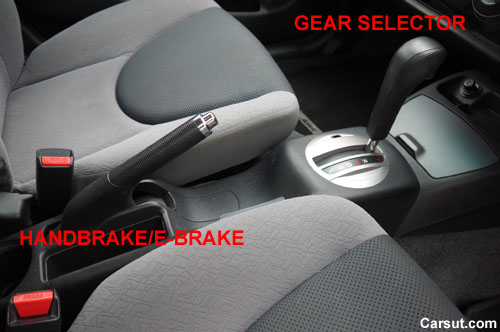
    Automatic car

    Study the gear selector

    A standard automatic gear selector has the basic four markings:

    P: Parking. Select P when you park your car.

    R: Reverse. Select R when you want to reverse the car.

    N: Neutral. Select N when you want to push the car or tow it.

    D: Drive. Select D to drive the car.

    Some cars will have extra markings other than the basic four above. It depends on how many speeds the automatic transmission has. Some cars like Honda or Toyota are equipped with five-speed automatic transmission. It is to allow the driver to have a better control to the car and sometimes it is useful to achieve slightly better mileage when driving in cities with heavy traffic jams. These are other automatic gear patterns found in some cars.

    Honda Civic Honda Fit Mini Cooper Others Others
    P
    R
    N
    D
    D3
    2
    1
    P
    R
    N
    D
    S
    L
    P
    R
    N
    D
    P
    R
    N
    D
    S
    P
    R
    N
    D
    L

    Automatic gear selector
    Some automatic gear patterns

    D3 or 3: This mode restricts the transmission to the first three gears, which means no matter how hard you throttle the gas pedal; the transmission will not change to fourth gear.

    D2 or 2 or S (Slow): Shifting into this mode means the transmission will be locked in second gear. The car will start to run in first gear but only limits up to the second gear. It is very useful for driving up hill or driving in adverse conditions. It is also useful to increase the engine braking effect during downhill driving.

    D1 or 1 or L (Low): Shifting into D1 or L indicates that the car will only run in first gear. This mode should only be engaged for towing, uphill, or downhill, otherwise the engine will be damaged if the RPM is too high.

    Overdrive or OD or ‘O/D OFF’: This mode is only available in some cars. It can be found as a small button attached to the gear knob or located somewhere around it. The car will shift to lower gear when you turn it on. Use it when you want to over take or in circumstances that require a lower gear.

    Step by step to drive an automatic car

    Step 1: Make sure the handbrake is engaged and the gear knob is positioned at P (Parking). Some cars cannot be started if the gear is not in the P mode. Step on the brake pedal with your right foot and turn on the ignition to start the engine. There are some automatic cars that can only be started if the brake is applied.
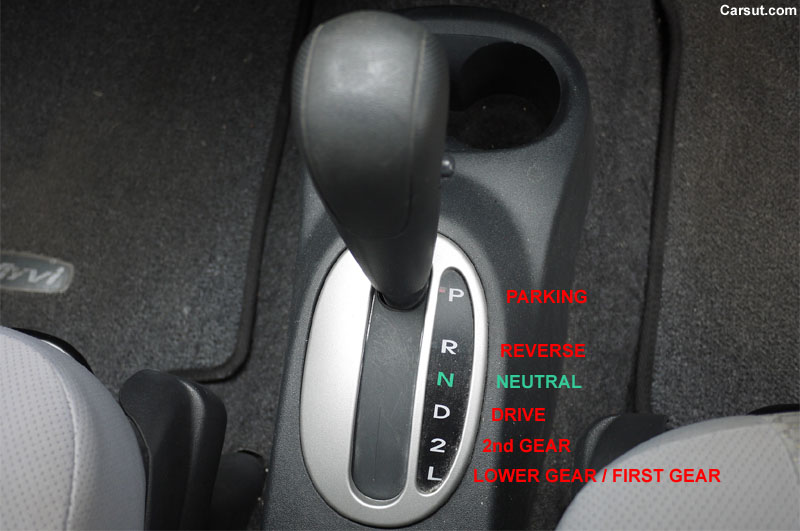
    Automatic transmission

    Step 2: Press your right foot on the brake pedal and make sure the brake is still on. Shift the gear selector to D mode. Check if your gear knob has a button that locks the transmission. If there is, you will need to press it to shift the gear selector. You may feel the car jerking slightly on an old car.


    Shift the gear selector to “D” (Drive).

    Step 3: Look around to see if it is safe to take off. Then release the handbrake and lift your foot slowly off the brake pedal.

    handbrake

    Step 4: Shift your right foot to the gas pedal. The more you step on the gas pedal, the faster the car will go.

    Step 5: Slow down the car. To slow down the car, move your right foot from the gas pedal to the brake pedal. Step down the brake pedal gently and the car will stop.
    Step on brake pedal

    Step 6: Making turns. When it comes to junctions, slow down the car and stop the car before the stop line if it is necessary. Turn the steering wheel towards the desired direction and step on the gas pedal gently.

    Step 7: Stop at traffic. From time to time, you will have to stop the car at traffic. If the traffic is crawling (stop for a few seconds and then move for a few seconds), step on the brake pedal to temporarily stop the car and then engage the gear to N. If the traffic is heavy or the traffic lights just turn red (you are required to wait for a long time), select N and apply the handbrake firmly. This is to secure the car from being shoved if you are hit by any vehicles.

    Step 8: Emergency brake. You should step on the brake pedal as hard as you can during emergencies. During the millisecond moments, make sure there is no vehicle trailing too close from behind.

    Step 9: Reverse. The steps to reverse a car are similar to those of running the car in first gear. With the brake on, engage the R (Reverse) gear. Release the handbrake and lift your foot from the brake pedal gently. The car will go reverse slowly and step harder on the accelerator if you want to go faster.

    Reverse gear

    Tips:

    • Never EVER use both feet to drive an automatic car. It is incorrect to use the right foot for gas pedal and the left foot for brake. Use only the right foot to operate both pedals.
    • Never use the handbrake to stop the car. The correct way to stop the car is to step on the brake pedal.

    Click here to see the video of How To Drive An Automatic Car.
  • Ferrari F12 Berlinetta unveiled: Fastest Ferrari to date

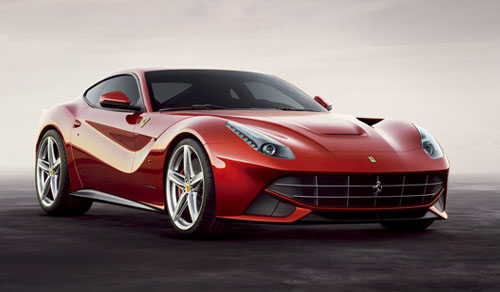
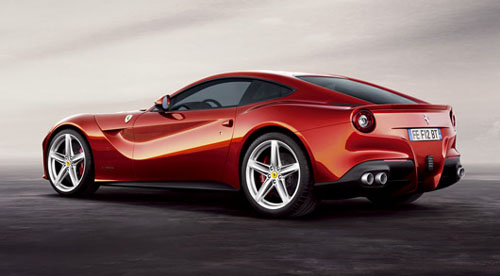
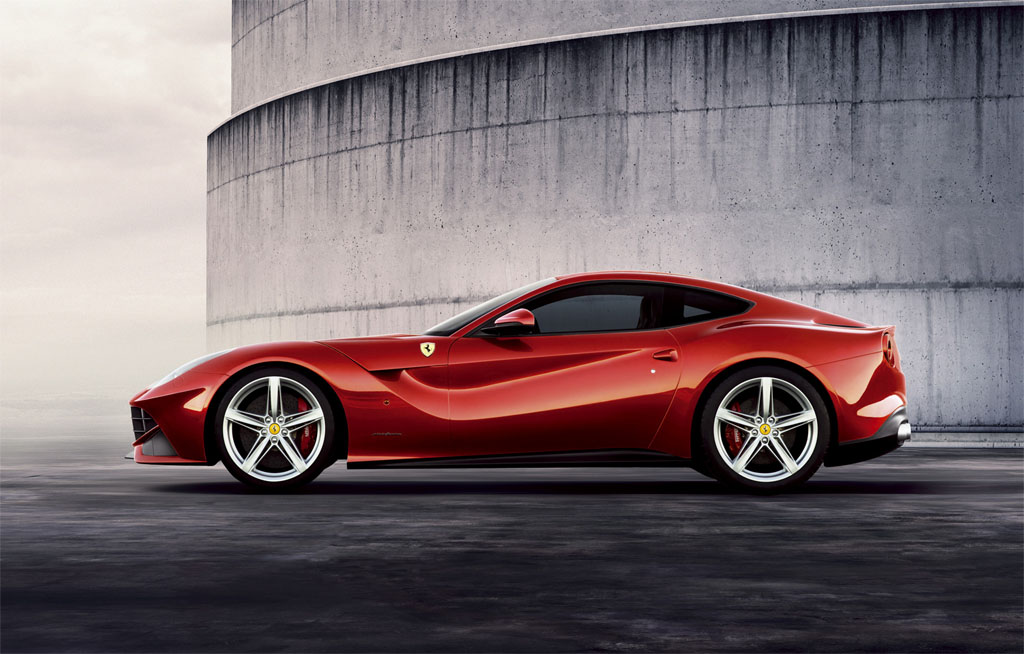
    Ferrari F12 Berlinetta
    Waiting for a supercar to be revealed is always like watching a strip show. We have been waiting for it since morning when we saw Ferrari’s official website reminding their fans that the new Ferrari will make its debut at 01:00 pm CET. And now, the cover is removed from the car, the cloths are off the strippers! This is it, this is the Ferrari F12 Berlinetta that will replace the Ferrari 599 GTB Fiorano.
    Ferrari F12 Berlinetta
    You probably have seen this before through some leaked photo in the internet. But you are not sure whether the previous photos are real, and we can tell you what you are seeing is real! Previously many car enthusiasts thought it is going to be named F620 GT but it turned out as F12 Berlinetta. The new Prancing Horse features a 6.3-liter 65-degree V12 engine that pumps a maximum of 740 CV at 8500 rpm and 690 Nm of torque at 6000 rpm. The wheelbase is shorter than the 599. Thanks to the new aluminium-intensive spaceframe, the weight of the F12 is 3,362lbs which is lighter than the aging 599.
    Ferrari F12 Berlinetta rear view
    For anyone who can’t take roller coaster, don’t buy this car because you will not enjoy the 3.1 seconds it takes from 0 to 100 km/h (62 mph). Coming just days before the Geneva Motor Show, the F12 boost a bloody fast top speed of 340 km/h (211 mph), making it the fastest Ferrari ever built. It also takes a mere 8.5 seconds from 0 to 200 km/h (124 mph). Besides, the F12 Berlinetta has a lower and more rearward center of gravity with a redesigned suspension and gearbox. With all these reasons, this supercar goes very fast, and really REALLY fast.
    Ferrari F12 Berlinetta interior
    Two days ago, we had just put our hands on the Ferrari 458 Italia and we hope we will be putting our hands on the F12 at the coming Geneva Motor Show. Here is the official rendering photos and the official technical specifications.

    TECHNICAL SPECIFICATIONS

    Engine
    Type: 65-degree V12
    Total displacement: 6262 cc
    Maximum power output: 740 CV at 8500 rpm
    Maximum torque: 690 Nm at 6000 rpm

    Dimensions and weight
    Length: 4618 mm
    Width: 1942 mm
    Height: 1273 mm
    Dry weight: 1525 kg*
    Weight distribution: 46% front, 54% rear
    Weight-power ratio: 2,1 kg/CV

    Performance
    Maximum speed: over 340 km/h
    0-100 km/h: 3.1 seconds

    Ferrari F12 Berlinetta Ferrari F12 Berlinetta Ferrari F12 Berlinetta

  • Nissan March: The Cheapest Nissan Cars To Own In Thailand

    Nissan March
    Starting from 380,000 baht (US$12,500), the Nissan March is the cheapest brand new Nissan you can buy in Thailand. In the U.S., it is known as Nissan Micra. It isn’t odd that the same car has few different names in different places. What is more important is, if it is worth to own one?

    The youthfulness March features a 1.2-liter engine (HR12DE) that develops 79 horsepower and 106 nm at 4,400 rpm. Thanks to the high torque output at low engine speeds, the car accelerates well and it gives good fuel consumption. The most stunning thing about the March is the 4.5 meters turning radius that makes it easy to turn. Together with the windscreen design that has great visibility, it makes the hardest parallel parking become easy. Without doubt, it is cute and most suitable for city use especially in a city like Bangkok. (more…)