Category: Toyota

Reviews on latest Toyota cars and used Toyota cars. Test drive and some sharing on driving experience.

  • A review on the Toyota 86

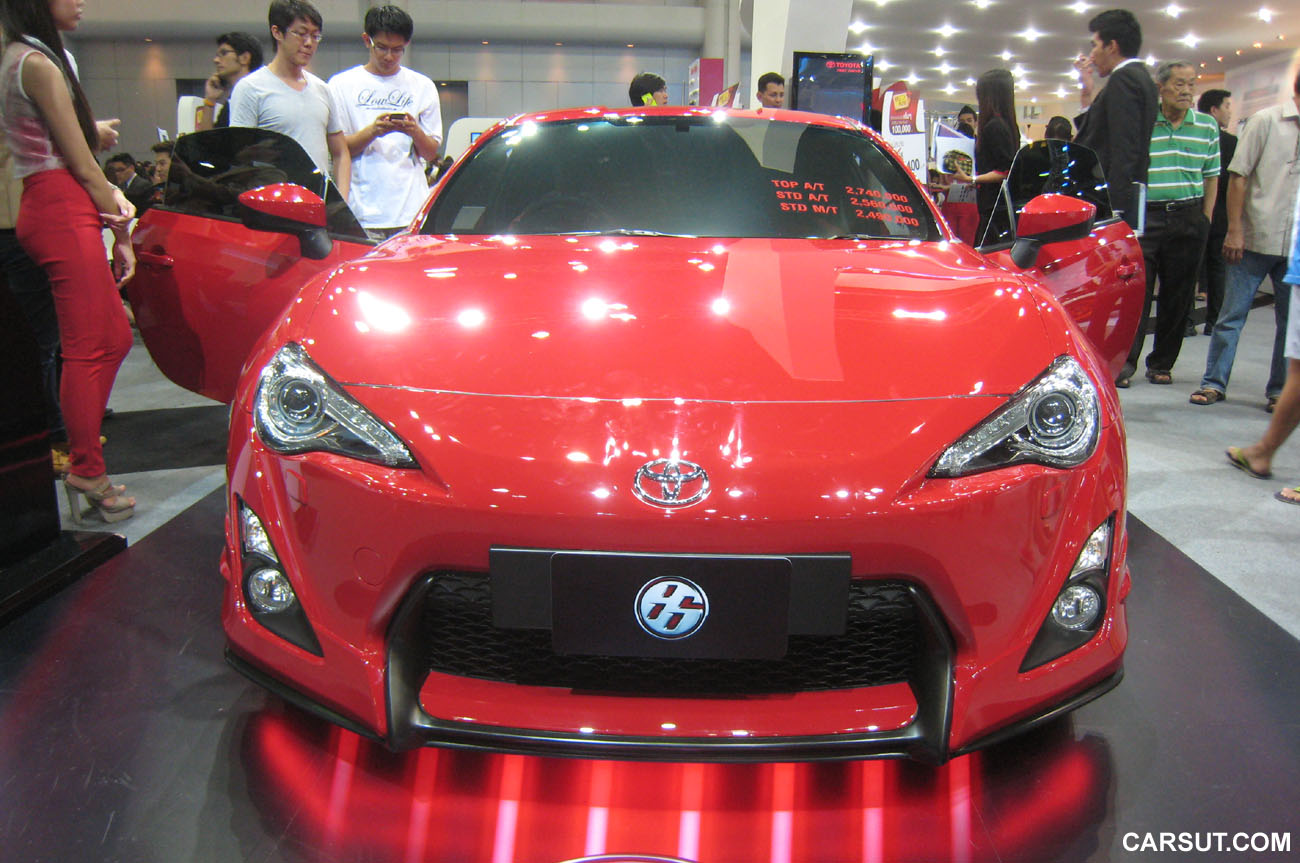
    Toyota 86

    Hachiroku (86 in Japanese) fans have been waiting for the Toyota 86 since decades ago after the production of the legendary Toyota AE86 ceased in 1987. Many of us thought it will be named FT-86 but the ‘FT’ is dropped, simply 86 or Hachiroku (????). This is because Toyota wants to pay a respect to the AE86. This time, the 86 is developed jointly by Toyota and Subaru, that’s why when the car hood is opened, we can see both the Toyota and the Subaru logo printed on the engine.

    The Toyota 86 is also known as Toyota GT-86 in Europe, Scion FR-S in US, and Subaru BRZ in several countries. Do not get confused because all of them share the same body style and layout. There are only a few things to distinguish them which are the hexagonal-shape grille in the Subaru BRZ and the inverted trapezoid in the Toyota 86. Other than that, all of them look alike just identical twin brothers.

    Toyota AE86 and Toyota 86
    An original AE86 meets the Toyota 86

    Design

    The 86 is a two-door coupe sports car with front-engine, rear-wheel drive layout. Toyota and Subaru did not let all the 86 fans down. The car is built with many characteristics and spirits that the AE86 has. The shape of the car, light-weight body, and well-balanced chassis are just a few to be mentioned. It is a great enjoyment to drive the 86 especially for those who like to drive ‘sideways’ rather than straight ways.
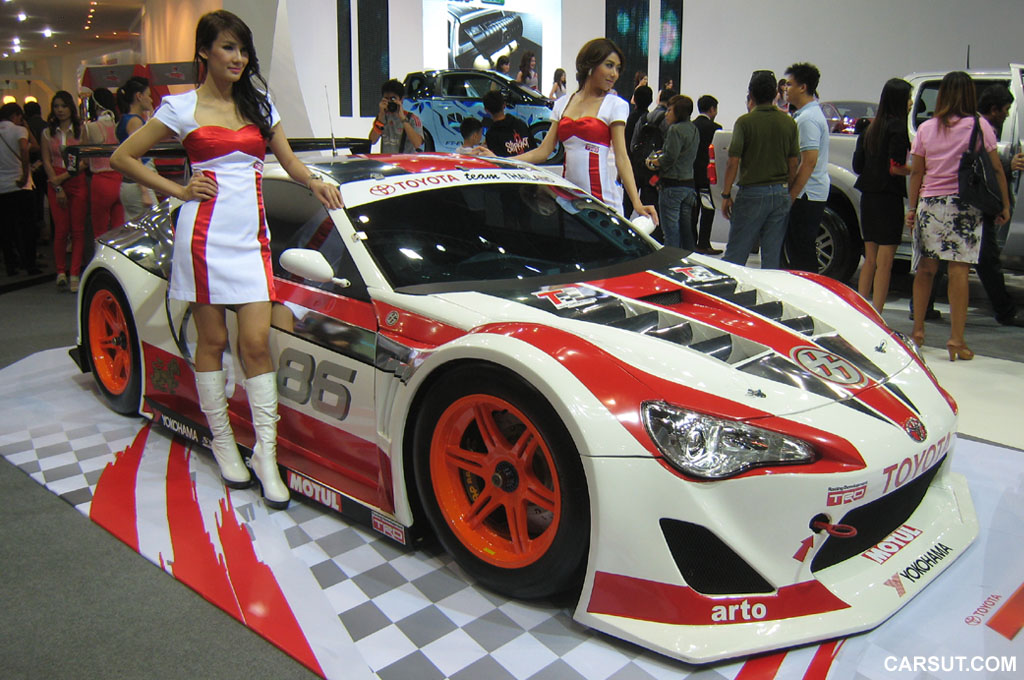
    Toyota 86 TRD
    A Toyota 86 race car by TRD

    Engine and Performance

    The Toyota 86 is powered by a 2.0-liter 4-cylinder Boxer 16-valve DOHC engine, named the FA20. Together with a direct & port fuel injection (D-4S) system, the car produces 147kW (200PS) at 7,000 rpm and 205Nm of torque from 6,400 to 6,600 rpm. The automatic transmission version accelerates from 0 to 100 km/h in 8.2 seconds and capable to reach a top speed of 210 km/h. On the other hand, the manual transmission version accelerates slightly faster. It takes only 7.6 seconds from 0 to 100 km/h and achieves a top speed of 226 km/h. The 86 also come with Torsen Limited Slip Differential (LSD) which is almost considered essential for drifting. This is one reason why we say it has many special characteristics. As for suspensions, the car sits on a MacPherson Strut with stabilizer at the front and double Wishbone with stabilizer at the back.
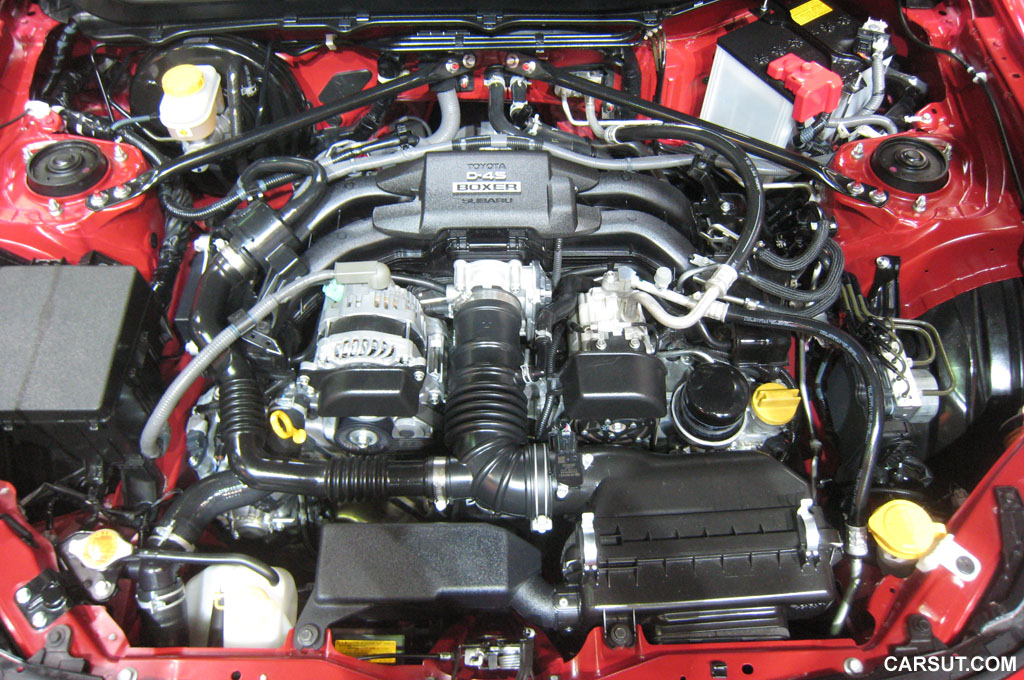
    Toyota 86 engine
    Toyota 86 Engine

    A list of active and passive safety features can be found in the 86 including reverse sensors, front and rear ventilated disc brakes, 7 SRS airbags (front, front side, curtain, and driver knee), 3-point ELR seat belts, ISOFIX, and alarm system.
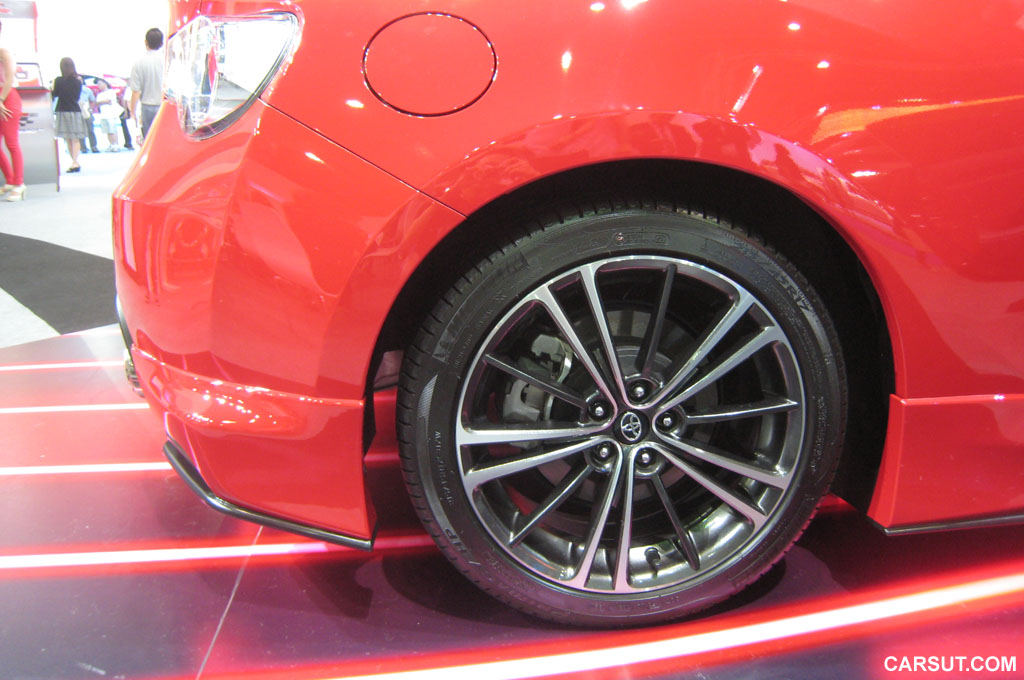
    Toyota 86 wheels
    17-inch alloy wheels with 215/45R17 tire

    Interior

    Inside the car, the first thing the driver will hold is the rack & pinion 3-spoke leather adjustable steering wheel with Electric Power Steering (EPS). In front of the steering wheel, there are only a few important dials showing the speed, rpm, fuel indicator, and engine temperature to the driver. Next to be noticed are the aluminum pedals where all the sports car should have, cruise control, power windows, and a 2-DIN CD-Player at the center console. Down to the CD player, there is a digital clock (just like the original AE86) and several buttons to adjust the air-conditioning as well as a button to start and stop the engine.

    To make the car sportier, the designer placed a few buttons beside the leather e-brake (handbrake) where the driver can choose the driving mode he prefers including VSC (Vehicle Stability Control), VSC Sport mode, TRC (Traction Control), and Snow mode.

    Although the 86 has 2+2 seats, the +2 rear seats are too small to be seated by adults. The legroom for the rear seats are cramp. It is only enough for kids under five or anyone who is shorter than 150cm. Look at the picture below, there is almost no legroom for rear passengers.
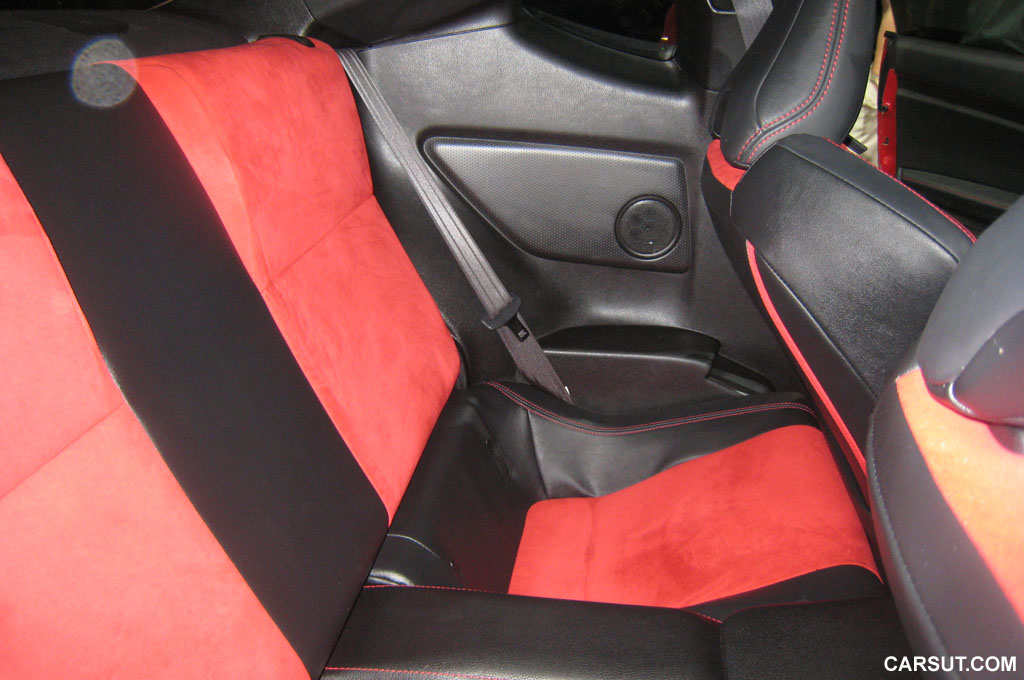
    Toyota 86 rear seat
    Toyota 86 rear seats

    Fuel Economy

    22 mpg city and 20 mpg highway; 9.35 km/l city and 8.50 km/l highway.

    Why we love the car?

    • Light weight. The kerb weight of the car is 1,298 kg.
    • Superb handling thanks to the well-balanced chassis.
    • It is cool with a low-slung boxer engine.

    What could be better?

    • Please sell it cheaper!
    • Make the rear seat with bigger legroom.

    Price

    • United States: Scion FR-S (MT) – MSRP from $24,200.
    • United Kingdom: Toyota GT-86 (MT) – £24,995; Toyota GT-86 (AT) – £26,495.
    • Thailand: Toyota 86 (MT) – THB 2,490,000; Toyota 86 (AT) – THB 2,560,000; Toyota 86 (AT) Top Ranging – THB 2,740,000.
    • Malaysia:Toyota 86 (MT) – RM 243,000; Toyota 86 (AT) – RM 249,000.

    Toyota 86’s competitors or similar cars: Subaru BRZ, Toyota GT-86, Scion SR-S, Hyundai Genesis Coupe, Mazda MX-5 Miata, Honda S2000, and Nissan Altima.

    The official production date for the Toyota 86 is started on the 16th March 2012. For those who want to be the first few owners of this future-going-to-be-legendary Toyota 86, you can place your order with Toyota now. Last but not least, let’s look at the pictures that compare the production Toyota 86 with the concept Toyota FT-86.

    Toyota 86 and Toyota FT-86
    Toyota 86 and Toyota FT-86 Concept

    Toyota 86 Pictures

    [nggallery id=13]
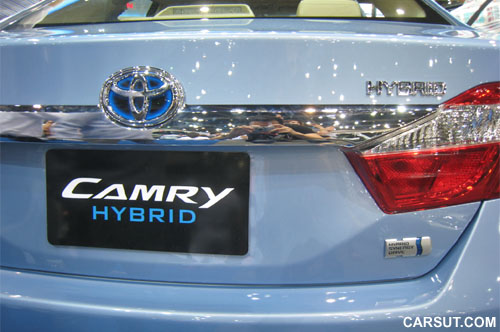
  • 2012 Toyota Camry – Cheaper and Better

    [imagebrowser id=9]

    The most exciting part of the newly launched 2012 Toyota Camry wasn’t the advanced features. Instead, it was the cheaper price tag and better performance that has been reinvented. At the 33rd Bangkok Motor Show, Toyota unveiled the seventh generation Camry that will go on sales in the Kingdom.

    There are two models available for the non-hybrid engine – the 2.0G and the 2.5G. The 2.0G is powered by a 2.0-liter 1AZ-FE VVT-i engine and a sequential four-speed automatic transmission generating a maximum output of 148PS at 6,000rpm. The 2.5G is fitted with a 2.5-liter 2AR-FE dual VVT-i engine. Partnered with a six-speed automatic transmission, the car pumps a maximum output of 181PS at 6,000rpm.

    On the other hand, three hybrid models were made available to serve the market that demand for eco cars, these being the 2.5 HV CD, 2.5 HV DVD, and 2.5 HV Navigator. All of them are uses the same engine and same Hybrid ECVT transmission which is the 2.5-liter 2AR-FXE VVT-i engine partnered with a 650V permanent magnet synchronous motor. The petrol-powered engine itself produces 160PS at 5,700rpm and 213Nm of torque at 4,500rpm while the electric motor creates a maximum of 105Nm of torque. When both of them combined, the total maximum out put is 205kW.

    2012 Toyota Camry Hybrid

    There is no difference for all the trim levels when it comes to suspensions and brakes. All of them assembled with an independent MacPherson strut front suspension with stabilizer bar and dual-link strut rear suspension. There are also a list of active and passive safety features found on the car including ABS, rear window defogger, crash body safetyGOA, and front SRS Airbag. For hybrid models, the car received extra side airbags, vehicle assist control, and hill-start assist control. Special features that only found in the top-ranging 2.5 HV Navigator model are switch-controlled rear armrest, memory seat, rear view camera function, and a multimedia touch screen audio system with ten JBL speakers fitted inside the car. Due to safety purpose, the DVD function will not available when the hand brake is off.

    Toyota Camry hybrid Eco and EV Mode

    The 2012 all-new Camry Hybrid models come with both Eco and EV Mode. Driver can choose either one according to their preference. In Eco Mode, the car will optimize throttle response to prioritize the maximum fuel economy. In EV Mode, the car runs quietly and gently because it is solely powered by the electric motor as long as it stays at low speeds. However, the maximum battery-only range is depends on the battery power and it is said to be less than 3 km (2 miles).

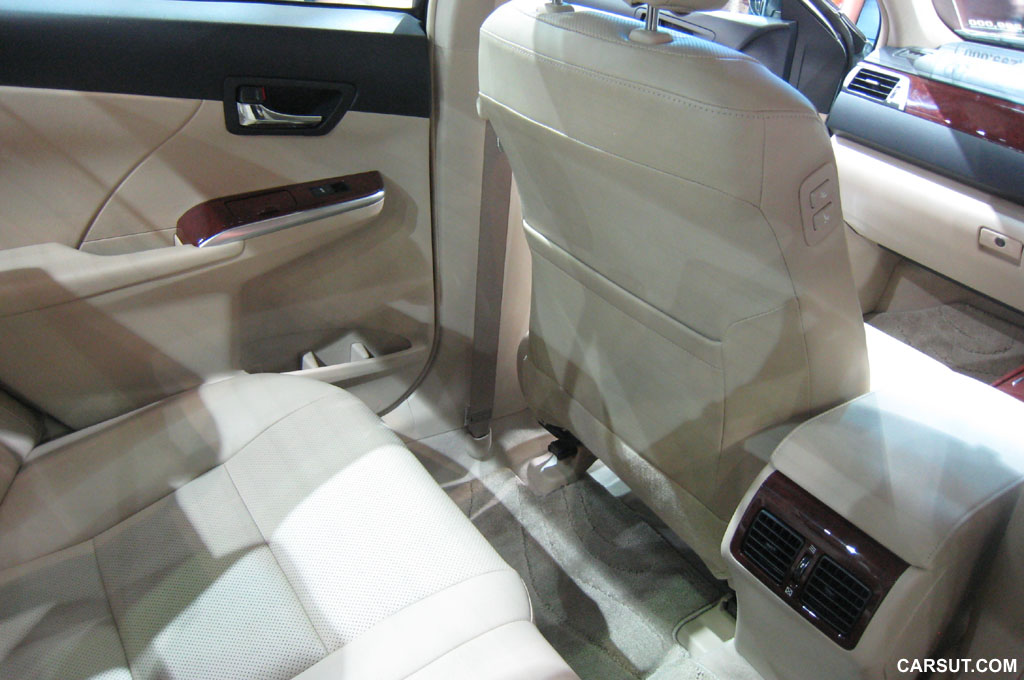
    Compared to the sixth generation Camry, the front and the rear lights are redesigned but the class of the car is still remained. The interior feels roomier and the legroom for rear passengers is slightly wider too.

    Toyota Camry rear seat
    Click on the image to enlarge it

    Fuel Economy

    • 2012 Toyota Camry Sedan: 25 city/35 highway mpg; 10.63 city/14.88 highway km/l.
    • 2012 Toyota Camry Hybrid Sedan: 43 city/39 highway mpg; 18.28 city/16.58 km/l.

    2012 Toyota Camry’s competitors or similar cars: Honda Accord, Hyundai Sonata, Nissan Altima, and Ford Fusion.

    Hybrids are now in an even more dominant position in the automobile market. Majority people are expecting a car with stylish design, low selling price, and super high fuel economy. The Toyota Camry may not be the best but it definitely delivers these expectations to its buyer.

  • Toyota FT-EV III Concept

    [imagebrowser id=7]

    The Toyota FT-EV III is a concept car introduced by Toyota back in 2011. It is a zero-emission electric car that completely runs on electric power. This blue concept car was first unveiled at the 2011 Tokyo Motor Show and now at the 2012 Bangkok International Motor Show. It is small, cute, and easy-to-navigate, and ideal for someone who drives less than 50 miles a day.

    Powered by an electric motor and lithium-ion battery, this car clearly tells the audience what can be created by the technology today although it is not available for sale yet. As Toyota always said, “right place, right time, and right vehicle”. When the right time comes, we will certainly see this car available for sales in the market. Toyota fans, be patient!

  • LIVE from Bangkok: Toyota NS4 Concept

    [imagebrowser id=5]

    The Toyota NS4 Concept is one of the top five highlights at the 33rd Bangkok International Motor Show. It is one of the two treasures brought by Toyota to add more colors to the events. We first saw the car at the 2012 Detroit Motor Show and now we stand a chance to take a photo with this superstar.

    Ultra-smooth sheet metal body with a par of swan-wing doors, the car allows anyone to imagine how the future cars will look like. What is really eye-catching is the cute-little-tiny yet useful side mirror that we almost can’t see it. Together with four new integrated glasses that built with Toyota’s latest technology, the windows help to improve driver visibility. Sleekness, futuristic, and cyber best describe the car. Inside, the plug-in hybrid features a large multi-touch screen that looks like a smartphone and a steering wheel that has all the control buttons within the driver’s fingers.

    The Toyota NS4 Concept is said to be the preview of what the next-generation Prius could look like. However, we should reserve our final verdict until Toyota says “Yes it is, this is the latest Toyota Prius!”

  • Toyota Prius C – You Drive Me Crazy!

    Toyota Prius C

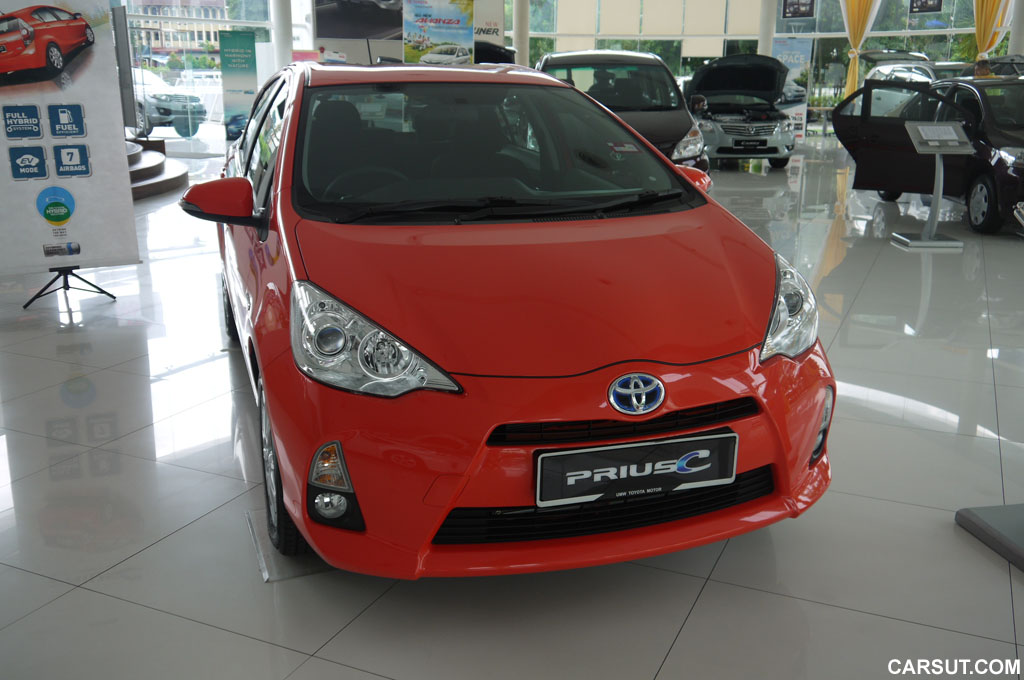
    It was Sunday yesterday and we had finally put our foot on the pedals of a brand new Toyota Prius C. Here we will describe the car from head to toe and from inside out. First impression and first observation, it looks really beautiful standing in the showroom and it is really small when compared to its elder brother Prius beside it. It looks like Jacky Chan standing beside the NBA player Yao Ming.

    In the U.S., the Prius C is made available in four variants – Prius C One, Prius C Two, Prius C Three, and Prius C Four. The one we are reviewing here is the only model available inMalaysiawhich is the Prius C Four or better known as Toyota Aqua in Japan.

    Exterior

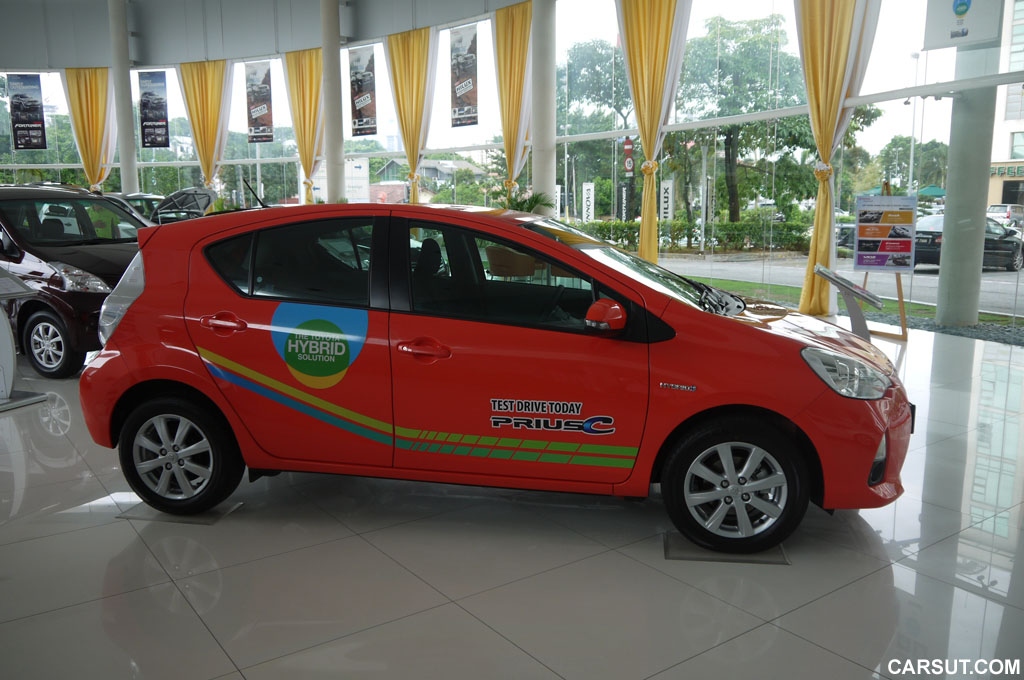
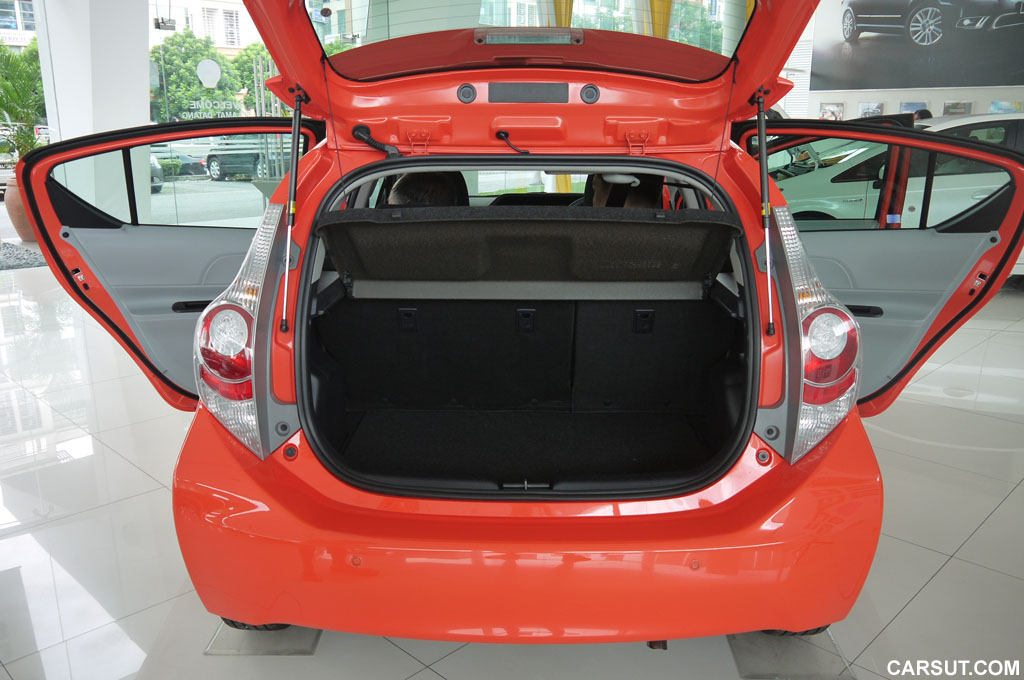
    The 2012 Prius C is an all-new hybrid model for the B-segment. It is something new, something different, and something fresh. The front bumper is fitted with a pair of integrated fog lamps that looks like dimples on a smiling face. What makes it different from other cars is the crystal clear rear lamp that combined with LED stop lamps in a unique shape. A good looking car should not lack of a set of cool wheels. The Prius C features a set of 15-inch 8-spoke alloy wheels with P175/65R/15 83V tires. It is not only cool but also helps to reduce the total weight of the car and perform well on different kinds of road surfaces. It is only three steps in length. Getting around in the city with this size could be fun and easier for parallel parking or reverse parking. As for the trunk, it may be small but some DIY furniture can still be loaded easily into it.

    Toyota Prius C logo
    Toyota Prius C logo with blue light-emitting diode (LED) illumination

    Interior and Technology

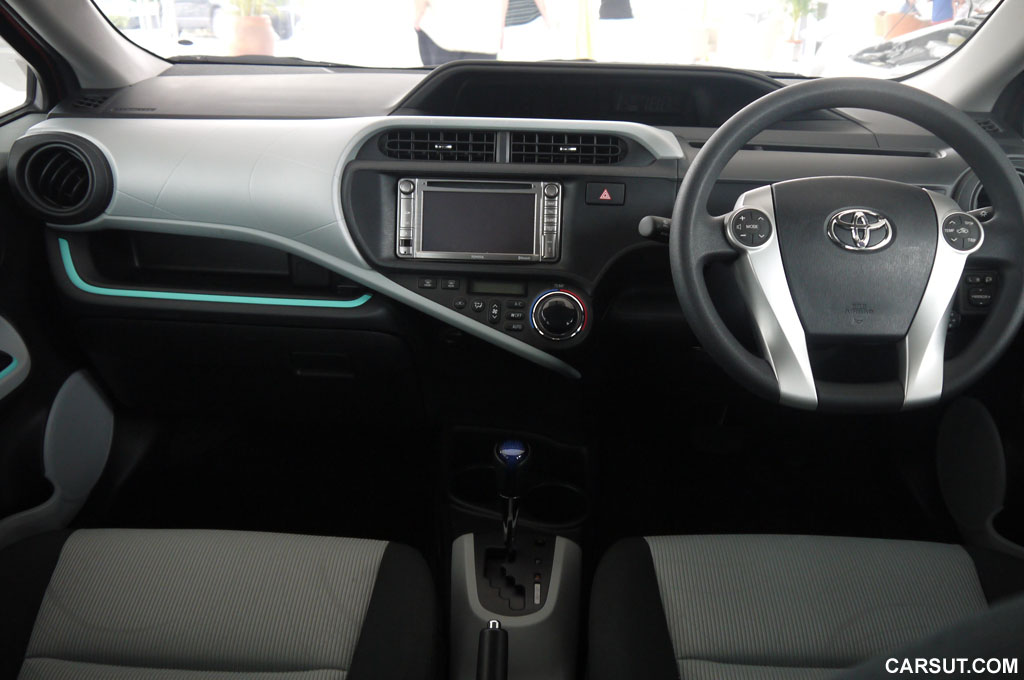
    We have to admit that the Prius C features a lot of new technology that will be fun to own. Key ignition seems to disappear from the Prius C. It features a Smart Key System with one power button for you to start the car like that of a computer, provided the key is in your pocket. The interior is nicely designed with a few florescent lights that make it look like a future car. The steering wheel is similar to that of the Prius minus the two buttons for phone calls. You can control the audio and climate from the steering wheel.

    Toyota Prius C Interior
    Interior of Toyota Prius C

    There is also a 6.1-inch multimedia screen at the middle of the dashboard that offers a few popular mobile apps, navigation systems, and data services to the driver. You can customize the setting of your car including GPS, voice recognition, radio features, and wireless features. Together with a reverse camera that hides behind and above the registration plate, the multimedia screen will show the image of what the camera catches at the back of the car.

    Toyota Prius C reverse camera
    Reverse camera hidden in the Prius C

    Performance and Safety

    The Prius C is powered by Toyota’s Hybrid Synergy Drive System that can be found in the Prius. A 1.5-liter four-cylinder engine and a pair of electric motor giving a total combined output of 99 hp sent directly to the front wheel through the Continuously Variable Transmission (CVT). On the gasoline engine itself, it produces 73 hp at 4800 rpm and 82 lb-ft of torque at 4000 rpm. A 144-volt nickel-metal hydride (Ni-MH) battery is located under the rear seats that give a maximum output of 19.3 kW. Light body, great aerodynamic, and great technology give a combined fuel economy at 50 mpg, making it the highest in the non plug-in hybrid available in the market.

    The Prius C sits on an independent MacPherson strut front suspension with stabilizer bar and torsion beam rear suspension. Together with the Electric Power Steering (EPS) and 31.4 turning circle diameter, the car is without doubt fun to drive. Inside all four wheels, it is equipped with power-assisted ventilated disc brakes for the front and drum brake for the rear.

    As for safety, the Prius C is equipped with a total of seven airbags including front airbags, side airbags, curtain airbags, and a driver’s knee airbag. Other safety features such as traction control (TRC), ABS, EBD, auto climate control, cruise control, and Toyota’s famous VSC (vehicle stability control) can be found in the car too.

    Toyota Prius C
    Click on the image to enlarge it

    Fuel Economy

    53 city/46 highway/50 combined mpg; 53 city/46 highway/50 combined mpg; 22.5 city/19.6 highway/21.3 combined km/l.

    What could be better?

    • The dashboard is superbly designed but it is covered with cheap plastic. Just knock a few times and you will know what we mean.
    • It is a few thousand dollars cheaper than the Prius but many things are not there. In the Prius C, you don’t get the feeling of Prius. It is much smaller and very cramped. A person taller than 175cm or 5’ 8” may hit the roof if he sits in the middle of the back seat.
    • The luxurious feeling in the Prius could not be found here.

    Price

    • United States: Prius C One (MSRP $18,950), Prius C Two (MSRP $19,900), Prius C Three (MSRP $21,635), and Prius C Four (MSRP $23,230).
    • Malaysia: Simple and easy, RM97,000 OTR (On The Road) with metallic paint.

    Toyota Prius C’s competitors and similar cars: Chevy Volt, Nissan Leaf, Honda Insight, Honda CR-Z, Honda Jazz/Honda Fit Hybrid, Lexus CT 200h, Honda Brio, and Nissan March.

    In a nutshell, the Toyota Prius C is a better version of the Yaris and smaller yet cheaper version of the Prius. It will be the number one buying choice for savvy consumers who need a small car but super huge gas mileage. Toyota Prius C, You Drive Me Crazy!

    Toyota Prius C Toyota Prius C Toyota Prius C Toyota Prius C Toyota Prius C

    Toyota Prius C interior Toyota Prius C Toyota Prius C back seat Toyota Prius C Toyota Prius C interior
    Click on the image to enlarge it